Window Display Model for Multi-City Sales Tours: Solving Setup, Damage, and Fit Issues
A window display model built for a multi-city sales tour fails in three predictable ways: it takes too long to set up, it arrives damaged, or it does not fit the next display space. All three are specification and packaging problems, and all three are cheapest to solve before production starts — not on the morning the venue opens.
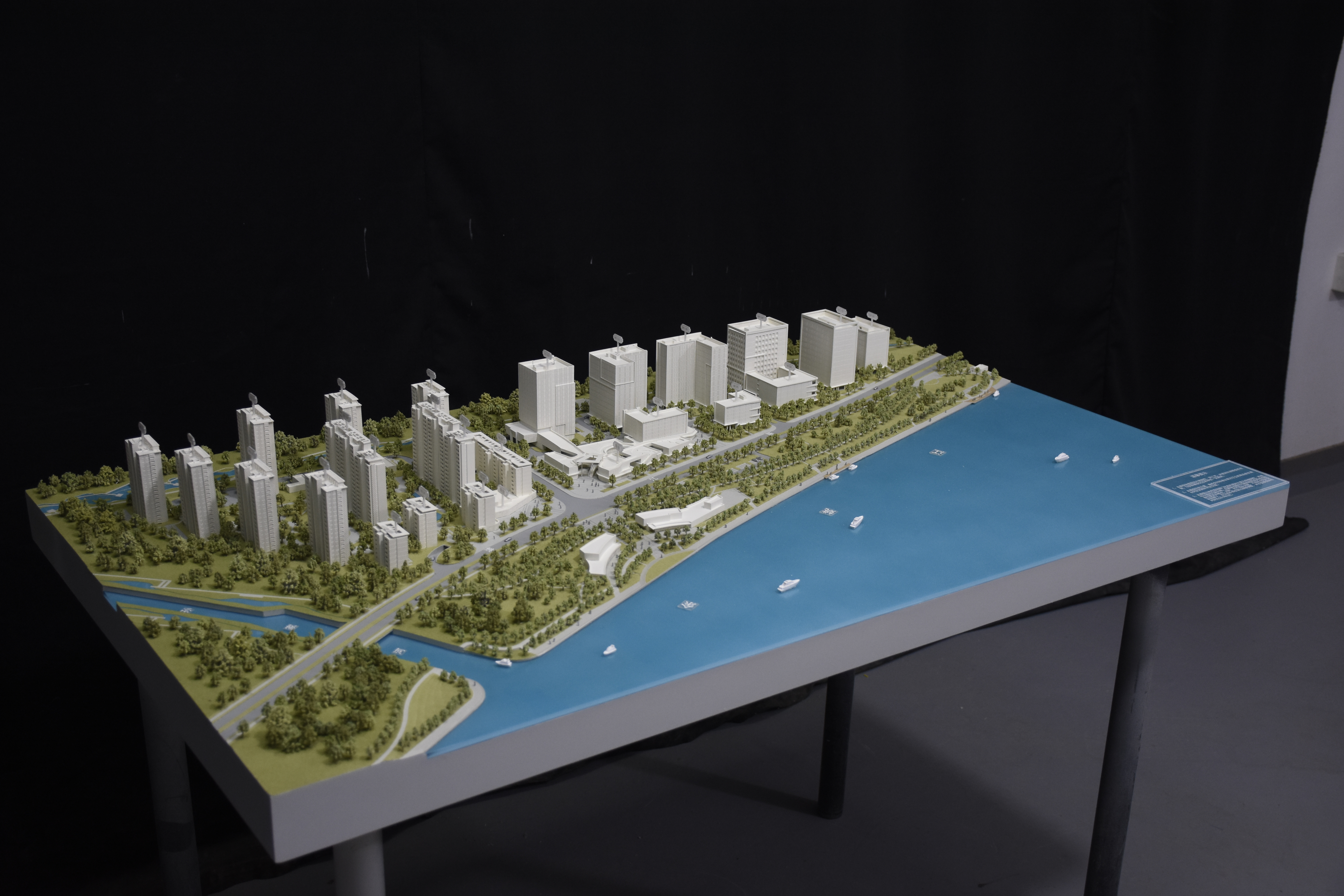
A tour-ready window display model is a custom architectural scale model specified for repeated transport, re-installation and re-lighting across more than one venue. It differs from a permanent showroom model in three technical areas: how the structure is divided, how it is packed, and how much of its size, scale, acrylic cover, base design and lighting zones are customized to the smallest display space on the route. JYD Models is a Shenzhen-based architectural model manufacturer established in 2013 that produces custom architectural scale models from 1:50 to 1:500 for real estate developers, planning teams, exhibition organizers and investment promotion projects.
Problem Definition: The Three Ways a Touring Window Display Model Fails
Most touring model failures are not model-making failures. The model itself may be accurate, well painted and correctly lit. It fails because it was specified for a static location and then moved between cities, sales centers, exhibitions and investment promotion events.
1. Setup failure: the model cannot be installed without a technician
When a model arrives as one rigid unit with permanently fixed landscaping, a glued acrylic cover and unlabeled lighting connectors, every installation needs specialist labour. In a single showroom that cost is paid once. On a tour with several stops, the same cost, travel time and risk are paid at every venue, and the local sales team is usually working to a fixed launch date. The practical question is not how impressive the model is, but whether two people can install it, connect the lighting and confirm the zones within the time available before the doors open.
2. Damage in transit: the most convincing details are the most fragile
The parts that make a window display model readable at a distance are also the parts that break first: base corners, acrylic covers, miniature trees and landscape sections, street lighting columns, thin tower crowns and the internal wiring loom. Packaging that protects a model moving once — foam, cardboard and shrink wrap — does not protect a model that is loaded and unloaded repeatedly, placed in temporary storage and handled by different logistics teams in each city.
3. Fit failure: display space changes from venue to venue
Sales center windows, exhibition halls, mall atria and investment promotion booths are not the same size. One venue may allow the model to be viewed from all four sides; another may offer a single front-facing window. If the model is larger than the window, the team removes sections or places it badly. If it is much smaller than the space, the display looks thin and the project's scale is lost. Fit is decided by model size, base footprint, scale and viewing height — all of which are customization decisions, not installation decisions.
Because these three failure modes are created at the specification stage, they are also solved there.
Industry Background: Why Touring Display Models Became a Logistics Problem
Demand for physical presentation models follows the architectural services market. Grand View Research values the global architectural services market at USD 411.7 billion in 2025, with Asia Pacific taking a 37.4% revenue share. Fortune Business Insights puts North America at 28.5% of the same market, or USD 113.66 billion, in the same year. Research houses define the boundary differently — Market Research Future reports USD 396 billion for the wider architecture, engineering and construction services market — but the direction is consistent: design activity is spread across several regions, and the presentation models produced for it increasingly travel between them.
Digital delivery has not replaced the physical model. In 2025, digital services such as BIM and 3D modeling held a 47.2% share of the AEC services market (Grand View Research), and the practical result for model buyers is a hybrid workflow: drawings and renders are reviewed and approved digitally, then converted into a physical model for sales rooms, exhibitions and investment promotion events. The physical unit is the part that has to travel.
Touring models are also trade goods. Under HS Code 902300, instruments and models designed for demonstrational purposes — a category that includes architectural exhibition models — are classified for global trade. A cross-border touring model therefore carries customs documentation, insurance and freight planning with it, and packaging stops being only a protection question: it affects freight volume, handling and arrival condition as well.
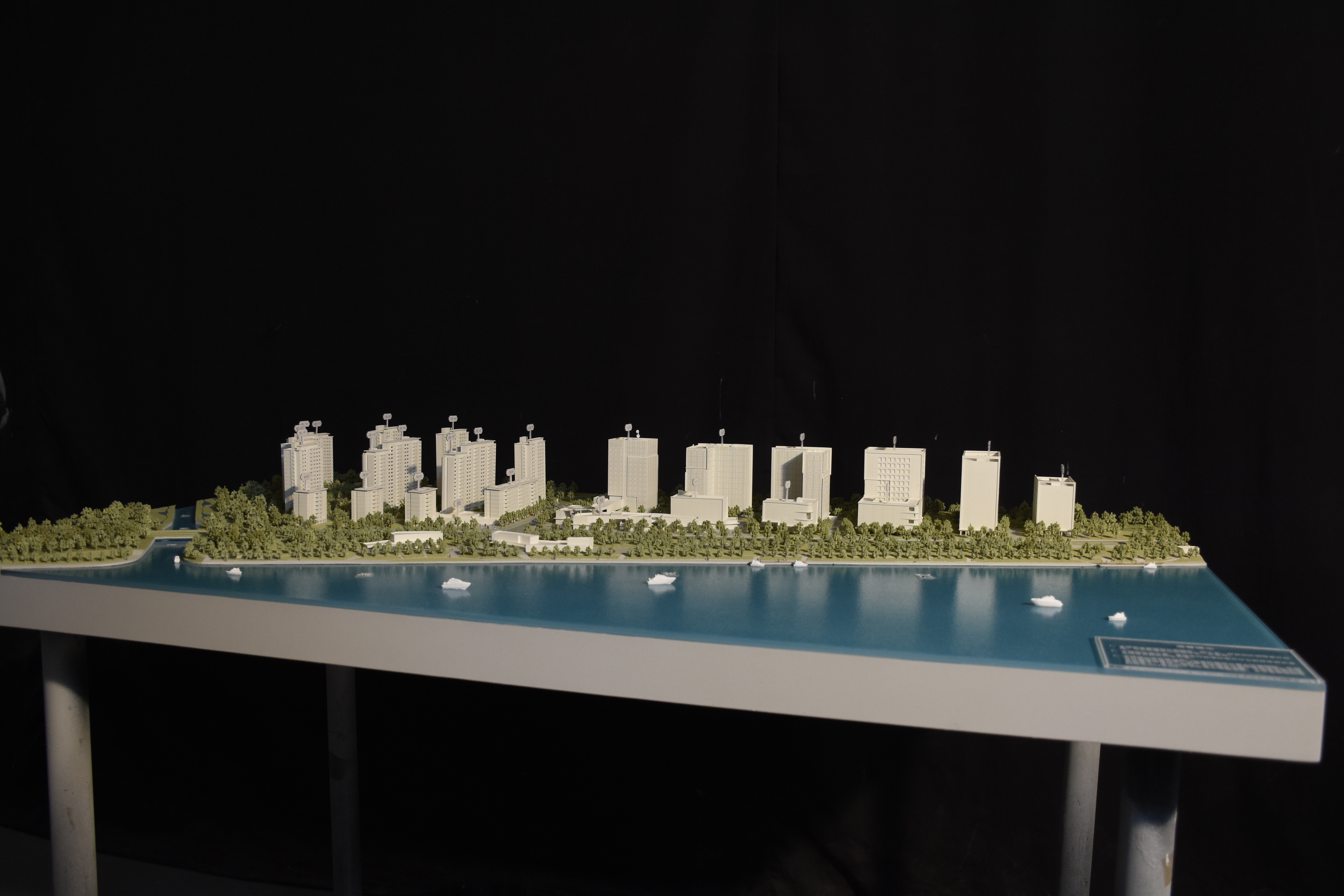
Scale expectations are standardized too. Window and exhibition display models are typically produced at 1:50, 1:100, 1:200, 1:500 or 1:1000. JYD Models builds its customized architectural physical models across a 1:50 to 1:500 scale range, with master plan models extending to smaller scales such as 1:2000 and interactive LED models covering 1:100 to 1:1000. LED lighting is now treated as a standard requirement for highlighting specific areas or night scenes rather than an optional extra, which means the lighting system has to survive transport and repeat installation, not just the first switch-on.
What this means for a touring project: three variables must be fixed before production begins — transport dimensions (the packed case, not the model), display footprint (the smallest venue, not the flagship), and the lighting and assembly method (who installs it and how long they have). Each one is a customization decision and each one belongs in the quotation stage.
Detailed Solution: How to Specify a Window Display Model for a Multi-City Tour
Solving setup, damage and fit does not require a heavier crate. It requires a model designed in sections, packed for repeated handling, and customized around the smallest venue on the tour route.
Project-based customization: the five variables that decide tour fit
JYD Models produces architectural models on a project-based customization model, and the customization list covers model scale, model size, building facade details, landscape design, LED lighting system, zoning display, touch-control interaction, multimedia linkage, material selection, base design, acrylic cover, packaging method and installation support. For a touring display, five of these do most of the work:
- Model size — specified against the smallest window or display footprint on the route, not the first and best venue.
- Model scale — larger scales such as 1:50 and 1:100 suit individual buildings, interiors and facade studies where material and structural detail matter; medium scales such as 1:200 and 1:300 are common for residential and commercial developments because they balance building detail with master plan visibility; smaller scales such as 1:500 and 1:1000 show the relationship between districts, roads, landscape and surrounding context.
- Acrylic cover — protects the model in the window, is removable for transport, and can be packed separately to avoid scratching.
- Base design — determines the footprint, the handling points, whether a wheeled base is practical, and whether the base can be split into sections that one or two people can lift.
- Lighting zones — buildings, roads, landscape and zoning display can be lit separately, with phased lighting, area highlighting, touch control and multimedia linkage available, plus programmable LED zones in the interactive LED range.
Modular construction and modular packaging
Modular structure for large-scale models and safe packaging for long-distance or international shipment are standard project requirements for display models. In practice, the model is divided so that each section fits a case that can be handled by two people, while the joints remain as invisible as possible once the model is assembled at the venue. Modular packaging also limits the blast radius of an accident: if one case is damaged in transit, the rest of the model still arrives intact and usable.
Wooden case packaging for long-distance and cross-border shipment
JYD Models' architectural physical models list modular packaging and wooden case packaging for long-distance shipment as available options. Large or fragile models can be packed in modular wooden cases for safer long-distance or international shipment, and the packaging method is one of the customization choices confirmed before production rather than decided at the loading dock. Packing decisions are also part of what is confirmed before delivery, which keeps the case dimensions aligned with the venues and the freight forwarder.
Materials and surface treatment that survive repeated handling
Materials for architectural physical models include acrylic, ABS, PVC board, resin, wood, metal and transparent sheet. Surface treatments include matte, gloss, metallic and transparent finishes plus custom painting. This is a durability trade-off rather than a purely visual choice: matte finishes hide handling marks better across repeated moves, while gloss and metallic finishes read strongly under display lighting but show fingerprints and scuffs; transparent glazing elements need protection in transit. JYD Models' case records list a display duration of 3 to 5 years for these project models, so material and finish decisions should be made for a multi-year display life, not a single launch event.
Lighting systems designed for repeat installation
LED lighting can be customized for buildings, roads, landscape and zoning display, and the interactive LED range supports programmable LED zones with phased display, route guidance and area highlighting. Because the lighting system is tested during quality inspection before packaging, faults are found in the factory rather than in a city where no technician is available. After delivery, lighting system troubleshooting and replacement advice for damaged parts are part of the after-sales support, alongside remote technical support and maintenance guidance.
OEM and ODM support for developers with existing model standards
OEM services are available for producing custom architectural models based on client designs, and ODM services cover design and production from start to finish. For a developer running a multi-city tour, OEM is often the right route: the project's own model design language, drawing set and lighting standards are kept, and the manufacturer builds to them. A supplier with both routes available can also move between them if the display requirements change mid-project.
What customization does not remove
- A very large master plan model may still require on-site assembly, and the tour schedule should include a longer installation window for it.
- Acrylic covers, bases and lighting accessories add transport volume, so packed case dimensions need to be checked against the smallest venue and against freight limits — not only the model dimensions.
- If the smallest venue cannot accept the packed case, the realistic options are splitting the model into more sections or reducing the scale. Both must be decided before production, not after.
Step-by-Step Breakdown: The Eight-Stage Workflow Behind a Tour-Ready Model
JYD Models runs customized architectural model projects through a defined workflow. Each stage maps to one of the three tour risks, which is why the sequence matters more than the individual steps.
- Quotation. Project scope, model type, approximate size, scale, lighting requirements, packaging method and delivery terms are priced together. Delivery can be quoted EXW Shenzhen, FOB Shenzhen, or with sea or air freight arranged to the destination. Minimum order quantity is 1 unit, because every model is a project-based custom build.
- Drawing review. CAD drawings, renderings, master plans, elevation drawings, landscape plans and display requirements are reviewed for scale and proportion before any material is cut. This is where a mismatch between the requested scale and the available display space is normally caught.
- Model specification confirmation. Final scale, final dimensions, base design, acrylic cover, lighting zones, material selection and packaging method are confirmed in writing. Production starts only after final drawings, model scale, display requirements and lighting details are confirmed, so this stage is what protects the tour schedule.
- Prototype approval. Facade treatment, landscape detail and lighting behaviour are approved before full production, so a touring model does not arrive with a facade detail that was never signed off.
- Production updates. Progress photos or videos are shared during production, which lets a sales team book venues against real progress instead of an assumed completion date.
- Quality inspection. Material inspection, scale and proportion checks, facade detail inspection, lighting system testing, assembly inspection and a final inspection before packaging. Lighting is tested here, before the model becomes difficult to access.
- Packaging. Modular packaging and wooden case packaging for long-distance shipment, with the packaging method confirmed before delivery. Loose parts such as landscape pieces and lighting accessories are packed so they can be identified and reinstalled at the next venue.
- Delivery. Delivery is arranged according to project size, model structure, packaging requirements and destination, followed by installation guidance, maintenance guidance and remote technical support.
Tour planning checklist for the buyer. Five items decide whether the workflow above pays off on the road:
- Measure every venue before the model specification is confirmed — width, height, depth, number of viewing sides and the access route for the case, not only the window opening.
- Approve a repacking routine together with the model, documented with photos of the packed case.
- Keep a small spare parts kit with the tour, because landscape pieces and lighting accessories are small items that are easiest to lose between venues.
- Name one person per city who owns installation, lighting switch-on and repacking.
- Record the lighting zone layout so that a reconnected display still shows the same zones in every city.
Use Cases: Where Touring Window Display Models Are Used
The same three failure modes appear in different forms depending on the type of tour. JYD Models' project records cover real estate developers, architectural design firms, urban planning companies and commercial property developers, with applications including sales center display, project presentation, investor communication, design review, urban planning exhibition and marketing promotion.
Multi-city residential and commercial sales tours
Real estate sales models, commercial building models and residential development models are installed in a sequence of sales centers. Because each center has a different window and floor area, the model size and base footprint are usually specified against the smallest center on the route rather than the flagship. The model then presents project layout, building orientation, landscape, traffic routes and supporting facilities consistently in every city.
Investment promotion and urban planning exhibition tours
Master plan and urban planning models are used for government presentation, investment promotion and planning exhibitions, where models are shown in exhibition halls and conference venues rather than permanent showrooms. These models are often larger in footprint, which makes modular structure and wooden case packaging the deciding factors for transport — a master plan model that cannot be broken into manageable sections cannot tour at all.
Retail, mall and showroom window rotation
Window display models for retail, commercial and boutique projects are viewed through glass, often from a distance and under mixed lighting. In that setting the acrylic cover and the lighting zones do more work than fine interior detail. Models can also include zoning display and phased lighting so that a single window can present different project phases on different days.
Cross-border tours
Models for cross-border tours are exported across JYD Models' main markets — China, the Middle East, Southeast Asia, Europe and the United States — and its project records cover clients in Canada, China, the UAE, France, the UK, the US, Vietnam, India, Indonesia, Hong Kong and Thailand. For these tours, HS Code 902300 classification, wooden case packaging and EXW or FOB delivery terms are part of the same planning decision rather than three separate administrative tasks.
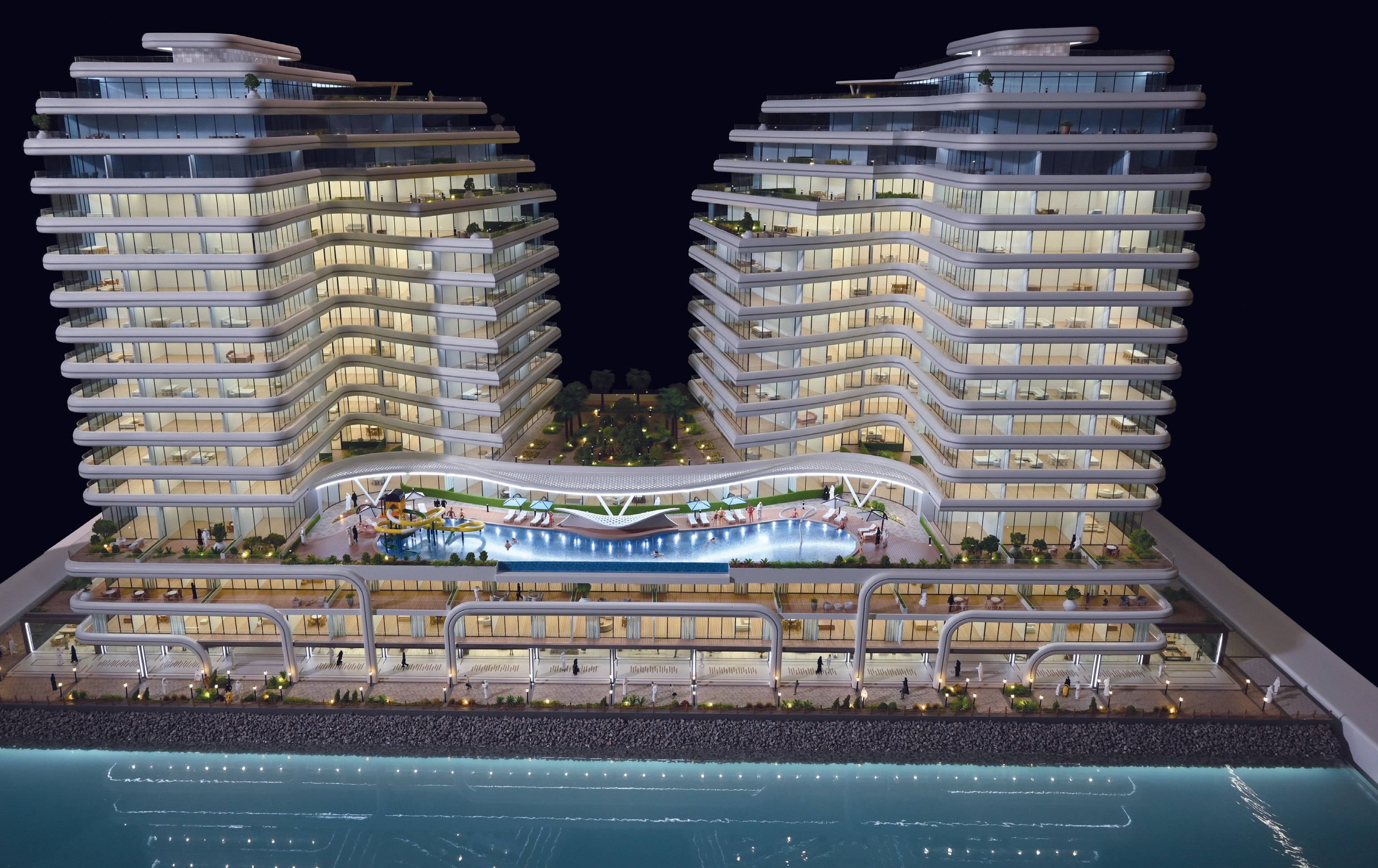
Comparison Table: Tour Risk, Design Response and Where It Is Confirmed
| Tour risk | Design and packaging response | Stage where it is confirmed |
|---|---|---|
| Long installation time at every venue | Modular structure for large-scale models, plus installation support and guidance | Model specification confirmation |
| Damage to base corners, facades and landscape detail | Modular packaging | Packaging |
| Damage on long-distance or international moves | Wooden case packaging for long-distance shipment | Packaging |
| Acrylic cover scratched or cracked | Custom acrylic cover, removable and packed separately | Model specification confirmation |
| Model does not fit the next window | Model size customized to the display space | Quotation and model specification |
| Detail unreadable at venue viewing distance | Project-based scale selection (1:50 to 1:500 for architectural physical models) | Drawing review |
| Lighting fails at the venue | Lighting system test before packaging, plus remote troubleshooting after delivery | Quality inspection and after-sales |
| Wrong model type for the venue | Model type matched to display purpose before quotation | Quotation |
For reference, these are the model types and scale ranges JYD Models produces, and how they are normally used in display:
| Model type | Model code | Scale range | Lighting | Typical display application |
|---|---|---|---|---|
| Commercial & Residential Building Scale Model | JYD-ARCH-CUSTOM | 1:50–1:500 | LED interior/exterior lighting optional | Architecture firms, property developers, sales galleries |
| Architectural Master Plan Scale Model | JYD-MP-CUSTOM | 1:200–1:2000 | LED optional | Urban planning, real estate development, government presentation |
| Interior Design & Exhibition Scale Model | JYD-INT-CUSTOM | 1:20–1:100 | LED lighting optional | Interior design, hospitality, retail, exhibition |
| Interactive LED Architectural Display Model | JYD-LED-CUSTOM | 1:100–1:1000 | Programmable LED zones | Real estate sales galleries, urban planning exhibitions, museums, corporate showrooms |
| Industrial Plant & Engineering Scale Model | JYD-IND-CUSTOM | 1:100–1:1000 | LED lighting optional | Industrial manufacturing, energy, logistics, infrastructure |
| 3D Printed Architectural Model | JYD-3DP-CUSTOM | 1:50–1:1000 | Not listed in the model specification | Architecture, urban planning, product design, education |
Frequently Asked Questions
How are custom window display models classified and shipped for international multi-city tours?
Architectural exhibition models are classified under HS Code 902300, which covers instruments and models designed for demonstrational purposes. For long-distance and international shipment, JYD Models can pack models with modular packaging and wooden case packaging, with the packaging method confirmed before delivery. Delivery can be arranged EXW Shenzhen or FOB Shenzhen, or by sea or air freight according to project size, model structure, packaging requirements and destination, with the terms confirmed in the final quotation and contract.
What can be customized on a window display model for a retail architectural project?
Customization covers model scale, model size, building facade details, landscape design, LED lighting system, zoning display, touch-control interaction, multimedia linkage, material selection, base design, acrylic cover, packaging method and installation support. OEM services are available for producing custom architectural models based on client designs, and ODM services cover design and production from start to finish. For a multi-city tour, the customizations that decide the outcome are size, base design, acrylic cover and packaging, because those four determine whether the model fits each venue and survives each move.
What is the minimum order quantity and how are payment terms handled?
The minimum order quantity is 1 unit, because each architectural model is produced as a project-based custom build. Payment terms are confirmed according to the project quotation and contract. For customized architectural model projects, production usually starts after deposit payment, and the balance is paid before shipment or according to the agreed contract terms.
What files and approvals are needed before production starts?
Buyers usually provide CAD drawings, renderings, master plans, elevation drawings, landscape plans and display requirements. Production starts after final drawings, model scale, display requirements and lighting details are confirmed. The workflow includes drawing review and model specification confirmation, a prototype approval stage before full production, and progress photos or videos during production, followed by a final quality inspection before packaging.
How long does production take, and what support is available if a model is damaged during a tour?
Lead time depends on project size and complexity, and production begins after final drawings, model scale, display requirements and lighting details are confirmed. After delivery, JYD Models provides remote technical support, installation guidance, maintenance guidance, lighting system troubleshooting and replacement advice for damaged parts, along with packaging and transportation support. If you are planning a multi-city tour, send the venue dimensions and the drawing set early so that scale, base design and packaging can be confirmed before production — a quotation and packaging plan can be prepared from the same drawings.
Conclusion
Setup, damage and fit are not random risks of moving a model between cities. They are the predictable results of specifying a permanent display for a travelling one. The three responses that change the outcome are modular construction, packaging specified for repeated long-distance handling — including wooden case packaging for cross-border moves — and project-based customization of size, scale, base design, acrylic cover and lighting zones around the smallest venue on the route. JYD Models, established in 2013 in Shenzhen, builds custom architectural scale models from 1:50 to 1:500 through a documented workflow that carries each of those decisions from quotation and drawing review through specification confirmation, prototype approval, quality inspection, packaging and delivery.
Plan the Next Tour Before the Model Is Built
Send the venue dimensions and the drawing set, and the model specification, scale recommendation and packaging plan can be confirmed from the same documents before production begins — including LED lighting zones, acrylic cover and base design for the tour route.
Download the product catalog: JYD Models 2026 product catalog (PDF)
Contact: Ford Yang · fordyang@jydmodels.com · +86 135-1065-4351 · WhatsApp · www.jydmodels.com
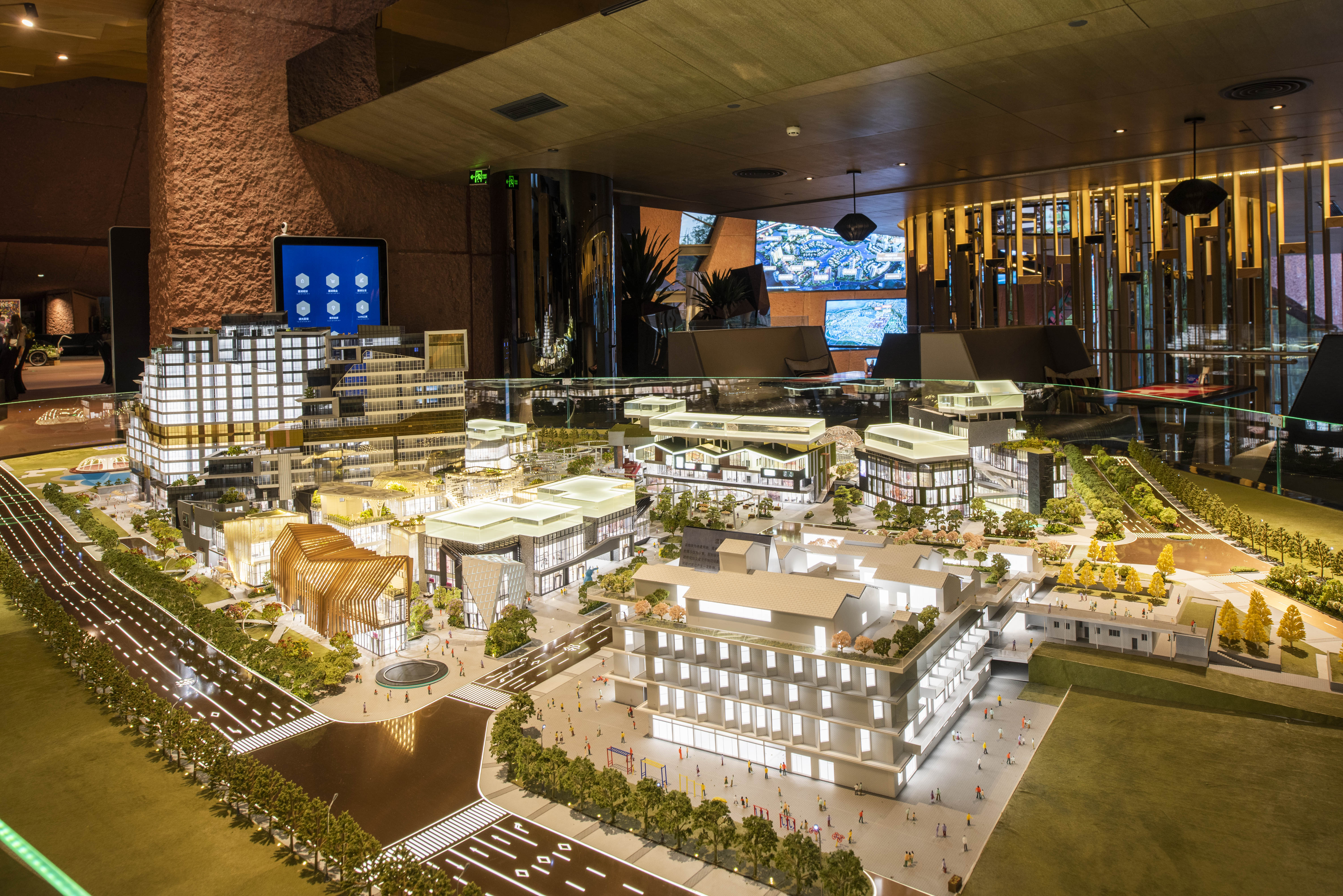
Have Questions or Need More Details?
Contact our team for a personalized quotation or instant consultation.
Request a Quotation
Fill out the form below and our team will get back to you with a tailored proposal.
WhatsApp Direct Chat
Prefer to chat in real-time? Message us on WhatsApp for instant assistance & quick answers.
- Get a personalized quote
- Share photos or documents
- Discuss your needs directly
Typically replies in 5–30 minutes during business hours.