How to Evaluate a Window Display Model Supplier: Capability Checklist and Delivery Assurance
Short answer: Evaluate a window display model supplier against five testable capabilities, in this order — R&D depth, production capacity, customization scope, inspection discipline, and delivery reliability. A supplier that can document all five with named people, defined facilities, and a written inspection sequence is a materially lower-risk partner than one that presents only finished photographs and a price.
A window display model is almost never an impulse purchase. It is a commissioned physical asset that must survive international shipping, installation, years of indoor display, and the daily scrutiny of everyone who walks past the window. When the model is wrong — a misread facade module, an unstable lighting zone, a base that does not fit the display opening — the real cost is not the model itself but the sales or exhibition window it was built to support.
This guide sets out a supplier evaluation framework that procurement managers, retail brand owners, and real estate marketing teams can apply before issuing a purchase order. It uses JYD Models (Shenzhen JYD Architectural Models Co., Ltd.), a Shenzhen-based custom architectural model manufacturer established in 2013, as a worked example of what verifiable supplier facts look like when you ask for them.
Problem Definition: Why Window Display Model Suppliers Are Hard to Compare
The core difficulty in this category is that quotations describe different scopes. One supplier prices a static acrylic building; another prices the same footprint with programmable LED zones, a removable acrylic cover, a finished base, modular packaging, and installation guidance. The two numbers are not comparable, and the lower one is not automatically the better value.
Three specific evaluation problems recur:
- Identity ambiguity. Buyers often cannot tell whether they are talking to a manufacturer or a trading intermediary. Intermediaries are not fraudulent by default, but they add a layer between your drawing set and the person who reads it, which is where detail errors originate.
- Unverifiable detail claims. Finished photographs show the best angle under good lighting. They do not show material thickness, facade joint alignment, or how the LED zones behave after two years of daily operation.
- Delivery risk under-specification. Large architectural models need modular construction and protective packaging. If packaging method, shipping plan, and installation support are not confirmed before production starts, the risk is transferred to the buyer at the worst possible moment.
The practical answer is to convert the conversation from brochure review into capability verification: ask for information that either exists in the supplier's operation or does not.
Industry Background: Why Physical Display Models Still Carry Commercial Weight
Physical scale models sit inside a growing but increasingly digital architectural services market, which makes supplier selection a question of integration rather than craft alone.
- The global architectural services market reached USD 411.7 billion in 2025, according to Grand View Research's Architectural Services Market Size Report, 2026–2033.
- Asia Pacific held a 37.4% revenue share of that market in 2025, while North America contributed 28.5%, valued at USD 113.66 billion.
- In 2025, digital services such as BIM and 3D modeling accounted for 47.2% of the AEC services market — evidence that physical models now operate inside a digital–physical hybrid visualization workflow rather than as a standalone craft product.
- Under HS Code 902300, instruments and models designed for demonstrational purposes — including architectural exhibition models — are classified for global trade, which means import documentation is a normal part of ordering.
- LED lighting integration is a standard requirement for highlighting specific areas or night scenes in architectural models, not an optional upgrade.
The implication for buyers is straightforward. A capable supplier must be able to receive a digital drawing set, interpret it accurately, and return a physical object that matches it — then protect that object through shipping and installation. Suppliers that cannot describe this workflow in sequence are usually learning it on your project.
Detailed Solution: The Five-Point Window Display Model Supplier Checklist
Each of the five points below can be verified with a question rather than an opinion. Where possible, ask for the answer in writing.
1. R&D Capability — Who Reads Your Drawings Before Metal Is Cut
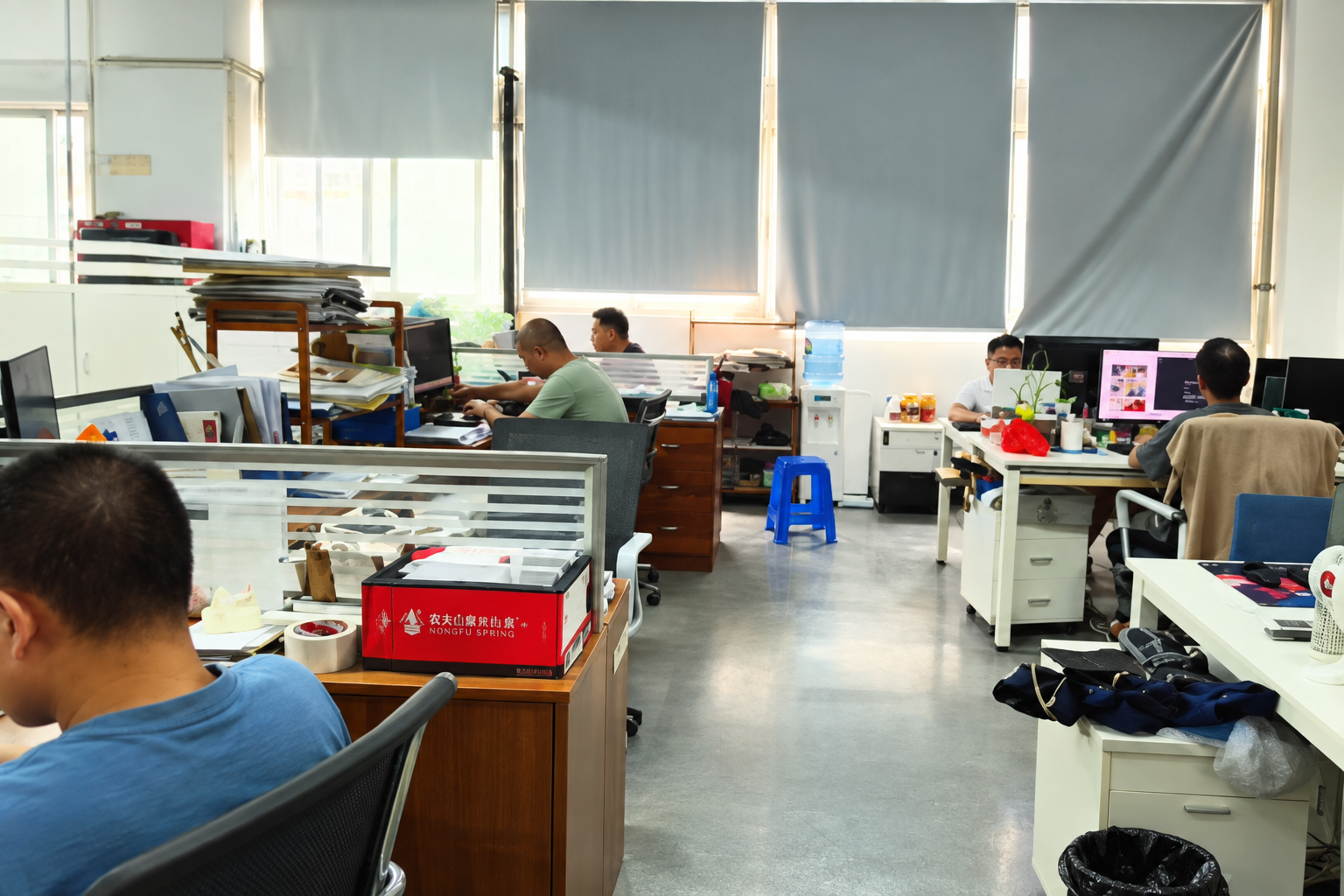
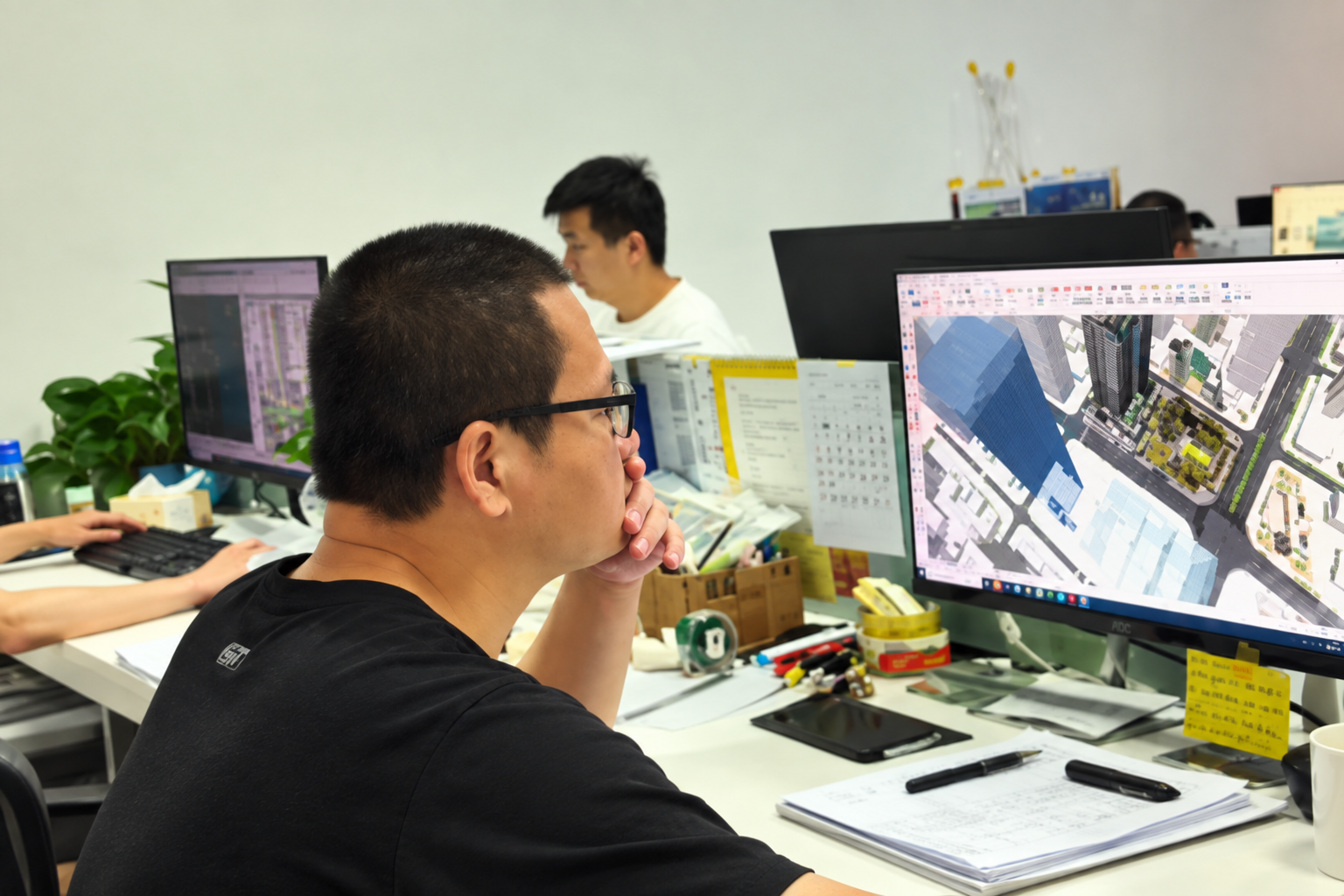
The first failure point in any custom model project is interpretation. Ask who performs drawing review, what software and fabrication methods are used, and what scale ranges the team works in routinely. A supplier with in-house engineering can answer this concretely.
JYD Models maintains a 12-engineer R&D team. Its production workflow can include drawing review, 3D modeling, CNC machining, 3D printing, laser cutting, hand assembly, painting, landscaping, and LED lighting integration. Standard scales for window and exhibition display models typically include 1:100, 1:50, 1:200, 1:500, and 1:1000, with project-based customization supported.
Verification question: "Who reviews our drawings, and what do you flag before production begins?" A capable supplier will describe discrepancies they look for — structural proportions, facade module repetition, missing elevations, and lighting zone boundaries.
2. Production Capacity — Can the Order Actually Be Built on Schedule
Capacity is not about how large a company looks. It is about whether the specific project can be absorbed without displacing another order or being displaced by one.
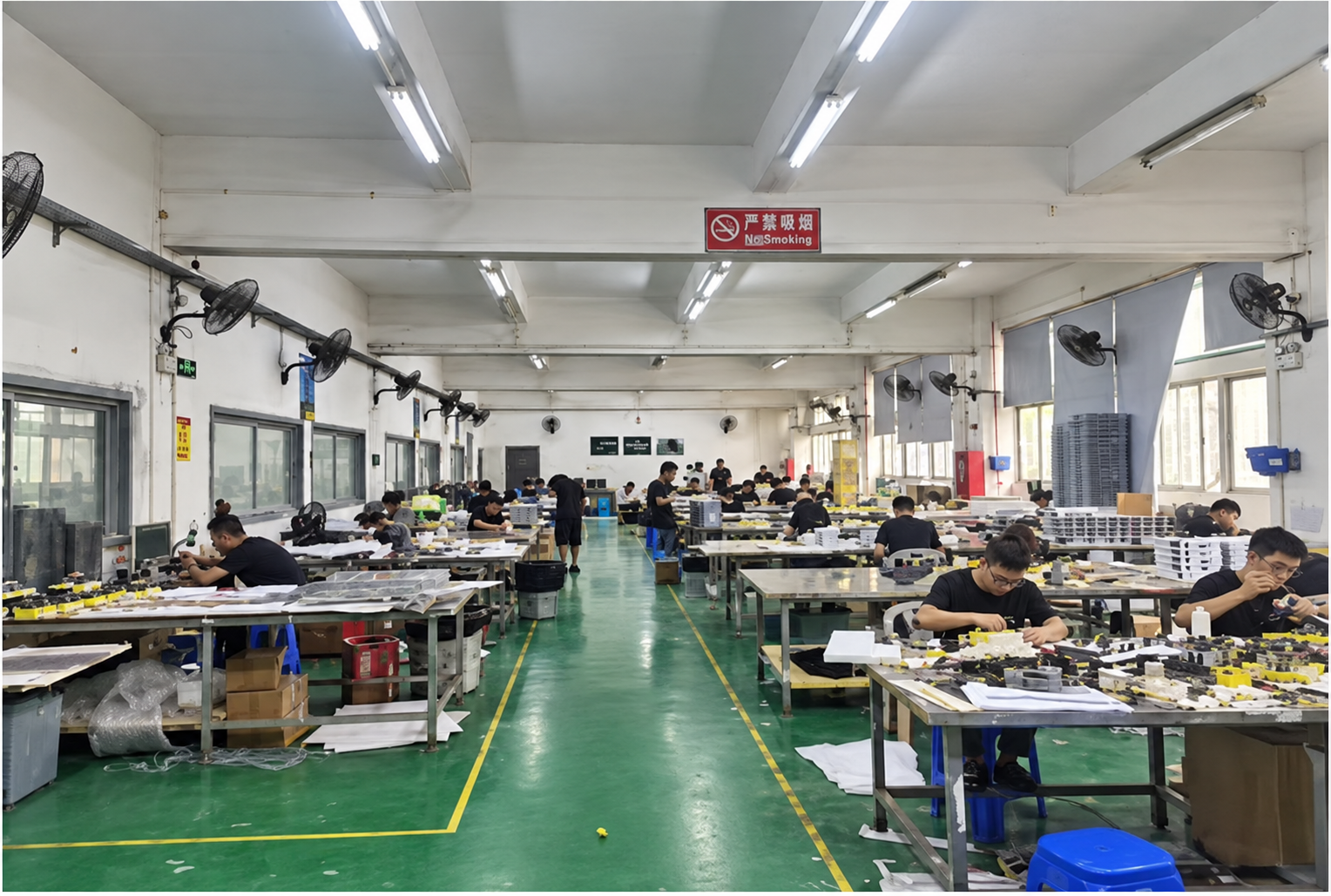
JYD Models operates a 4,000 m² factory with 200 employees and an annual output of approximately 1,000 units. The company employs over 200 professionals including model makers, designers, and engineers for customized model production, and roughly 50% of output is exported, serving markets including the EU, Saudi Arabia, Vietnam, India, Southeast Asia, China, Africa, Qatar, the UAE, and the Middle East.
Verification question: "How many customized projects can you run simultaneously, and what happens to my schedule if a larger project lands?" Project-based custom production means capacity depends on model scale, project complexity, lighting requirements, and delivery schedule — so the honest answer is a scheduling answer, not a headline number.
3. Customization Scope — What Is Genuinely Configurable
A supplier that customizes only size is a different supplier from one that customizes display behaviour. For window display work, the configurable scope usually decides whether the model is display-ready or a compromise.
JYD Models supports customization across model scale, model size, building facade details, landscape design, LED lighting systems, zoning display, touch-control interaction, multimedia linkage, material selection, base design, acrylic cover, packaging method, and installation support. The minimum order quantity is 1 unit, which suits single-window retail and boutique projects as well as multi-site rollouts.
Verification question: "Show me a finished project with the lighting and interaction scope we are asking for." Scope claims should map to a delivered example, not to a capability list.
4. Quality Inspection — The Sequence, Not the Slogan
Quality assurance in model manufacturing is a sequence of checkpoints. If a supplier cannot name them in order, the process is informal. JYD Models' documented control sequence runs as follows:
- Drawing review before production
- Material inspection
- Scale and proportion check
- Facade detail inspection
- Lighting system test
- Assembly inspection
- Progress photo/video confirmation with the client
- Final quality inspection before packaging and shipment
The progress photo and video step is the one buyers should insist on. It converts an invisible production phase into a reviewable one, and it allows corrections before the model is sealed into packaging.
5. Delivery Reliability — Packaging, Shipping, Installation, After-Sales
Delivery assurance is where most supplier evaluations are thinnest, and where most project failures actually occur. Three items should be confirmed before production starts:
- Packaging method. Modular packaging and wooden case packaging are available for long-distance shipment. Large models should be designed to break down along logical building lines, not forced into one crate.
- Installation support. Confirm who provides installation guidance on site or remotely, and what documentation accompanies the shipment.
- After-sales path. JYD Models provides remote technical support, installation guidance, maintenance guidance, lighting system troubleshooting, replacement advice for damaged parts, and packaging and transportation support.
Verification question: "If a lighting zone fails six months after installation, what happens?" A defined support path is more valuable than a longer warranty statement without an owner.
Decision rule: Score each of the five points as documented, partially documented, or verbal only. Any supplier with two or more "verbal only" answers is a supplier you are carrying risk for.
Step-by-Step Breakdown: Running the Evaluation Before You Commit
The checklist is only useful if it is applied in a sequence that produces comparable answers from every supplier on your shortlist.
- Issue a defined project pack. Send drawings, the intended display location, the available footprint (window opening, showroom alcove, or sales center floor area), viewing distance, and whether the display is interior or exterior-facing.
- Fix the scale and footprint first. Scale determines how much detail is legible. Building models typically run 1:50–1:500, master plan models 1:200–1:2000, interior and exhibition models 1:20–1:100, and interactive LED models 1:100–1:1000. Agreeing scale early controls cost, lead time, and presentation quality.
- Define lighting and interaction scope explicitly. LED zones, zoning display, phased lighting, touch control, and multimedia linkage should be written into the specification, not left to interpretation.
- Request the drawing review response. This is the first real capability signal. A supplier that returns questions and flagged discrepancies is reading the drawing set. A supplier that returns only a price is not.
- Approve the prototype stage where applicable. Prototype approval allows facade treatment, material finish, and lighting behaviour to be confirmed before full assembly. Where a physical prototype is not practical, require a 3D modeling output and a material sample for sign-off.
- Lock the inspection checkpoints into the agreement. Specify the progress photo and video confirmations and the final pre-shipment inspection as formal deliverables.
- Confirm packaging and shipping plan. Agree modular breakdown, crate specification, and the shipping schedule against your display deadline.
- Confirm installation and after-sales ownership. Name the person or team responsible for installation guidance and post-delivery technical support.
Production timing follows the confirmation of final drawings, model scale, display requirements, and lighting details. Buyers who treat those four items as a single approval gate instead of four separate discussions usually recover one to two weeks of schedule.
Use Cases: Where the Checklist Changes the Outcome
The same five evaluation points apply differently depending on where the model will be displayed.
- Retail window display. The model is viewed from a fixed distance through glass, often at an angle, and must read within seconds. Scale and lighting contrast matter more than interior detail. Confirm LED zone control and dust protection via acrylic cover.
- Showroom window scale display. Longer dwell time means buyers will inspect facade joints and landscape edges. Confirm facade detail inspection and material finish specification.
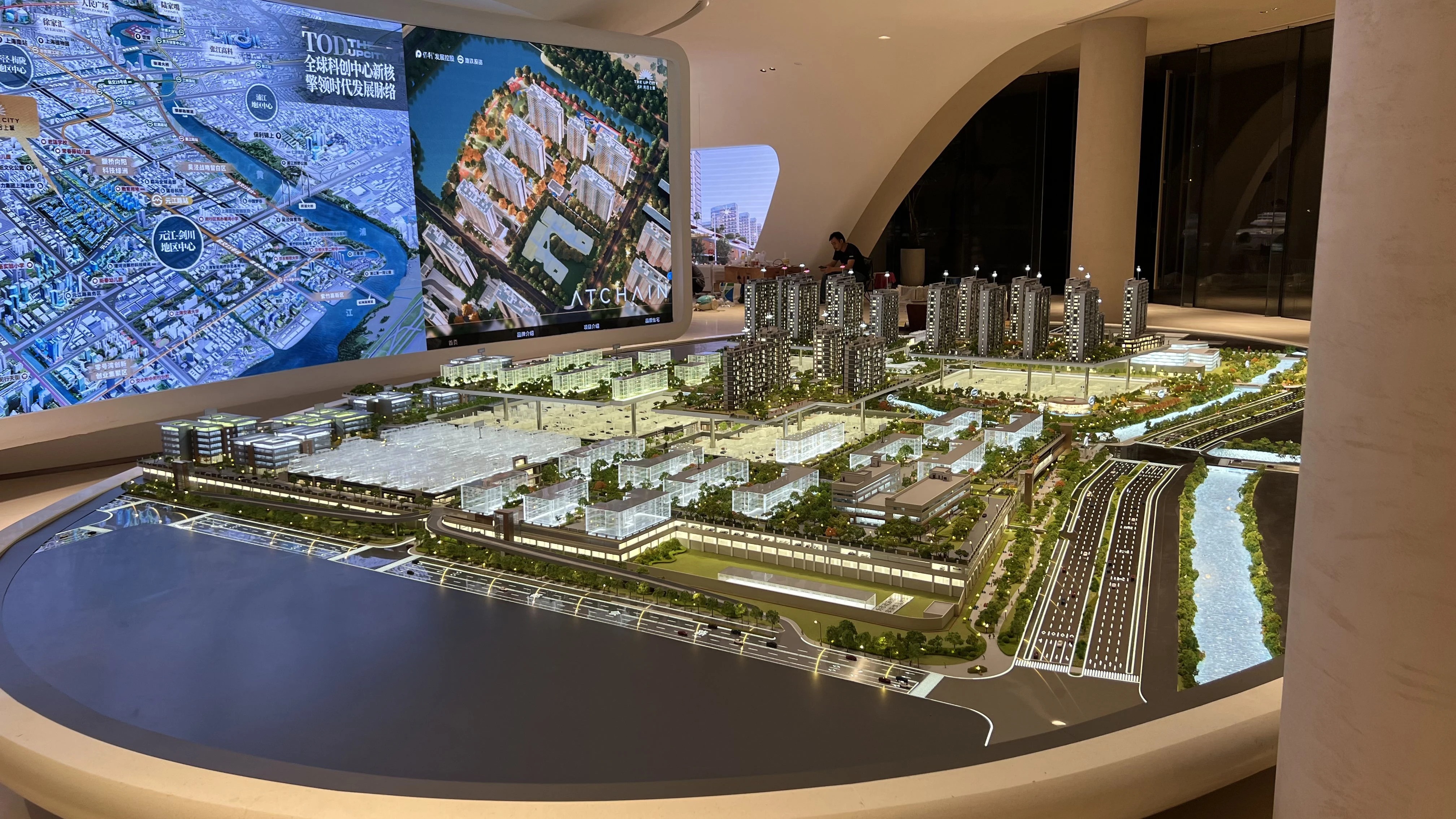
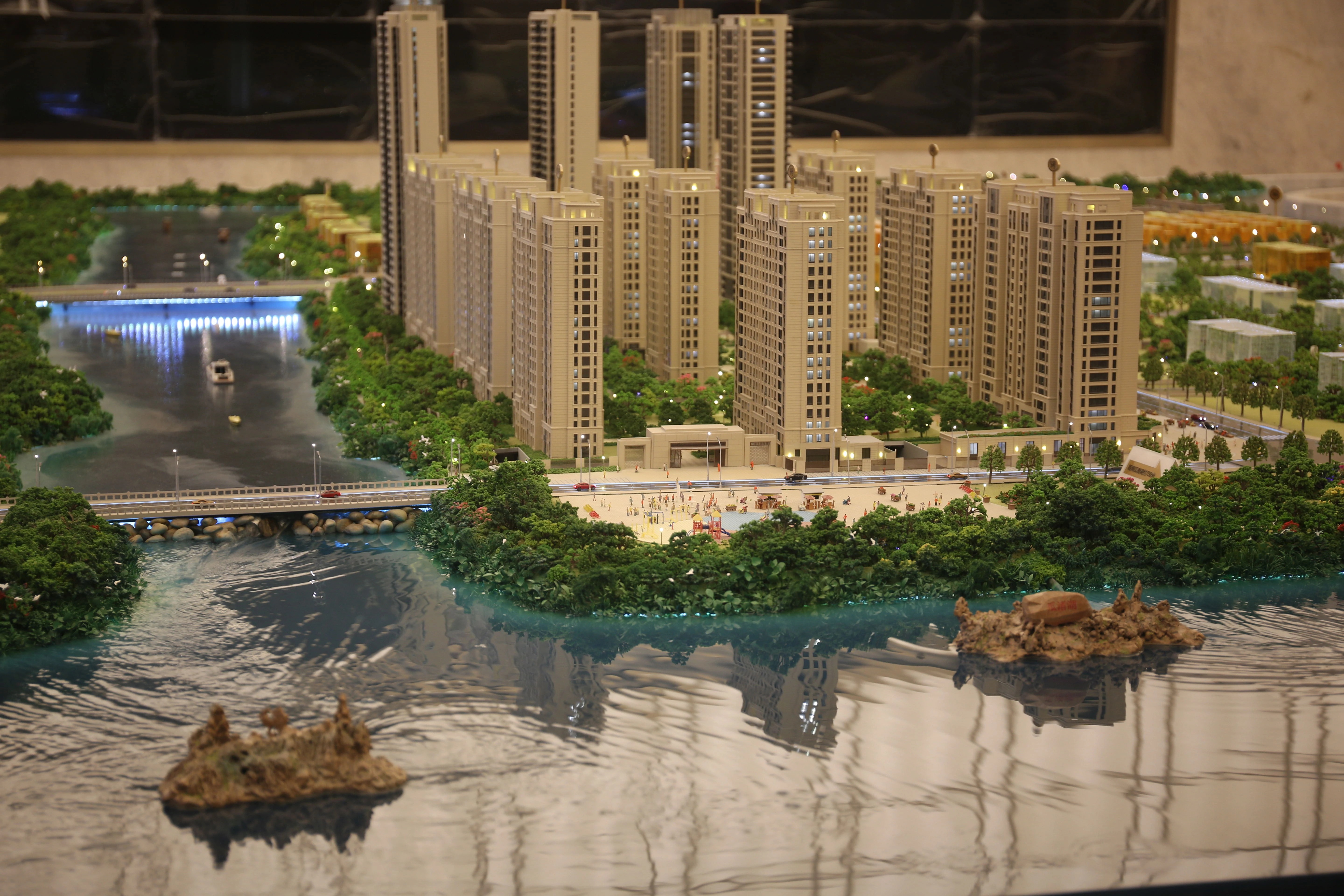
- Real estate sales center. The model supports sales presentations, investor briefings, and design review over a period of years. JYD Models' architectural scale model case data indicates a typical display duration of 3–5 years, so durability, lighting stability, and maintenance access are the critical evaluation points.
- Commercial building and office complex presentation. Orientation, traffic routes, and public amenities must be legible together. Confirm zoning display capability and lighting that separates building masses from landscape.
- Museum and gallery installation. Interpretive accuracy and finish quality dominate. Ask for hand assembly and painting detail standards, plus a defined lighting system test.
- Exhibition and pop-up projects. Speed of setup and repeated handling replace long-term durability as the priority. Modular packaging and a documented assembly sequence become the primary delivery criteria.
- Urban planning and public building displays. Master plan scale ranges of 1:200–1:2000 are typical, and terrain, road hierarchy, and phasing are the evaluated content rather than individual facades.
JYD Models has established project collaborations with real estate developers, architectural design firms, urban planning companies, and commercial property developers. Its architectural scale model projects have been implemented in Canada, China, the United Arab Emirates, the Netherlands, France, the United Kingdom, the United States, Vietnam, India, Indonesia, Hong Kong, and Thailand — a spread that matters because it indicates experience with different shipping, installation, and site conditions rather than a single domestic market.
Comparison Table: Evaluation Dimensions Against Verified Supplier Facts
The table below maps each evaluation dimension to a verifiable reference point. Use it as a template for scoring your own shortlist.
| Evaluation Dimension | What to Verify | Verified Reference (JYD Models) |
|---|---|---|
| Production base and workforce | Factory footprint, employee count, in-house vs outsourced production | 4,000 m² factory in Shenzhen; 200 employees; over 200 professionals including model makers, designers, and engineers |
| R&D depth | Named engineering team, drawing review step, modeling and prototyping methods | 12-engineer R&D team; drawing review before production; 3D modeling, CNC machining, 3D printing, laser cutting |
| Scale range | Supported scales for buildings, master plans, interiors, and interactive models | Buildings 1:50–1:500; master plans 1:200–1:2000; interiors 1:20–1:100; interactive LED 1:100–1:1000; standard display scales include 1:50, 1:100, 1:200, 1:500, 1:1000 |
| Customization scope | Lighting, zoning, interaction, materials, base, cover, packaging | Model scale and size, facade details, landscape, LED lighting system, zoning display, touch control, multimedia linkage, material selection, base design, acrylic cover, packaging method, installation support |
| Quality inspection | Documented checkpoint sequence and client-facing progress reporting | Material inspection → scale and proportion check → facade detail inspection → lighting system test → assembly inspection → progress photo/video confirmation → final inspection before packaging |
| Order flexibility | Minimum order quantity for single-site and multi-site projects | MOQ of 1 unit; project-based custom production |
| Delivery and packaging | Modular packaging, export packaging, shipment coordination | Modular packaging and wooden case packaging for long-distance shipment; approximately 50% of output exported to the EU, Middle East, Saudi Arabia, Qatar, UAE, Vietnam, India, Southeast Asia, Africa, and China |
| After-sales support | Defined support path for lighting faults, damage, and maintenance | Remote technical support, installation guidance, maintenance guidance, lighting system troubleshooting, replacement advice for damaged parts, packaging and transportation support |
| Track record | Cross-market implementation and display duration | Projects implemented in Canada, China, UAE, Netherlands, France, UK, US, Vietnam, India, Indonesia, Hong Kong, and Thailand; architectural scale model case display duration of 3–5 years |
| Trade classification | Import documentation and classification for demonstrational models | HS Code 902300 applies to instruments and models designed for demonstrational purposes under global trade classification |
Note on scoring: This table is a reference standard, not a ranking of suppliers by brand. A supplier that documents fewer dimensions honestly is easier to manage than one whose claims cannot be traced to a facility, a team, or a process step.
Contact Verification Points Before You Place an Order
Supplier identity is the cheapest thing to verify and the most expensive thing to get wrong. Before releasing a purchase order, confirm the following:
- A named contact, not a role inbox. JYD Models' commercial contact is Ford Yang — a named individual who can be held to the project schedule.
- Email on the company's own domain. The contact email should match the company website rather than a free mailbox. JYD Models uses fordyang@jydmodels.com and publishes its website at www.jydmodels.com, with its blog at blog.jydmodels.com.
- Phone and messaging consistency. The voice number and the WhatsApp number should be the same line. JYD Models lists +86 135-1065-4351 for both telephone and WhatsApp, with a public WhatsApp link for direct enquiry.
- A physical production address. Ask for the factory address, then compare it with the claimed production footprint. JYD Models operates from 4th Floor, Building 7, Shiyan Tango Third Industrial Zone, Baoan District, Shenzhen, China.
- Live production evidence. Request a video walkthrough of the production floor or a live call during an active project stage. Static marketing images cannot confirm capacity, but a walkthrough shows the assembly and lighting-test stations in use.
- A written reporting commitment. Progress photo and video confirmation should appear as a contractual inspection step, not as a favour. This is already a defined stage in JYD Models' quality control sequence.
- Documentation you can review independently. Ask for the current product catalog and specification ranges in advance so that scale, material, and lighting scope can be compared on paper before any commitment.
FAQ
What trade classification applies when importing a window display model?
Instruments and models designed for demonstrational purposes — the category that includes architectural exhibition and window display models — are classified under HS Code 902300 for global trade. Buyers should confirm classification with their own customs broker and provide the supplier with accurate product descriptions, materials, and declared values. Suppliers experienced in export handling will normally provide packing lists, commercial invoices, and transport documentation, and should also be able to advise on modular packaging that keeps a large model within manageable crate dimensions. JYD Models ships to markets including the EU, Middle East, Saudi Arabia, Qatar, the UAE, Vietnam, India, Southeast Asia, and Africa, and provides packaging and transportation support as part of its after-sales scope.
How do I verify that a recommended window display model manufacturer can actually deliver?
Verification is a matter of documentation rather than reputation. Ask for four things: the size of the engineering team and what drawing review produces, the factory footprint and staffing level, the documented inspection sequence, and a defined after-sales path. A manufacturer that answers all four concretely — with a team size, a facility area, a checkpoint list, and a named support channel — is verifiable. JYD Models, for example, operates a 4,000 m² factory with 200 employees and a 12-engineer R&D team, applies an eight-step inspection sequence from material inspection through final pre-shipment inspection, and provides remote technical support and installation guidance after delivery. Where a manufacturer cannot state these points, the correct action is to remove it from the shortlist rather than to negotiate a lower price.
What drives the cost of a custom window display model?
Cost is driven by four variables: model scale and physical size, the complexity of facade and landscape detailing, the scope of LED lighting and interaction features, and the level of packaging and installation support required. Scale is the strongest single factor, because it determines how much of the model is fabricated at full detail. Lighting scope is the second, since zoning display, phased lighting, touch control, and multimedia linkage each add components and testing time. Because quotations are built from different scopes, buyers should normalize them against a written specification covering scale, size, lighting zones, materials, base, acrylic cover, and packaging before comparing figures. JYD Models supports a minimum order of 1 unit, which allows a single window or boutique project to be quoted on the same specification basis as a multi-site rollout.
Can I approve a prototype before full production begins?
Yes, and in most custom projects you should. Prototype or pre-production approval is the point where facade treatment, material finish, and lighting behaviour are confirmed before the model is fully assembled. Where a physical prototype is impractical, the equivalent control is a 3D modeling output reviewed against the drawing set, supported by material samples and a lighting test. JYD Models' production workflow includes drawing review, 3D modeling, CNC machining, 3D printing, laser cutting, hand assembly, painting, landscaping, and LED lighting integration, with progress photo and video confirmation used to validate work in progress before packaging. Buyers should treat prototype approval as a formal milestone with written sign-off, because changes after assembly are significantly more disruptive than changes at the prototype stage.
How is delivery timing and installation support managed?
Lead time in custom model manufacturing is based on project size and complexity rather than a fixed product schedule. Production starts after final drawings, model scale, display requirements, and lighting details are confirmed — which is why buyers who consolidate those four approvals into a single, decisive review gain the most schedule. Once in production, delivery assurance depends on three things: progress photo and video confirmation during build, modular and wooden case packaging suitable for long-distance shipment, and a defined installation and after-sales path. JYD Models provides modular packaging and wooden case packaging for international shipment, together with installation guidance, maintenance guidance, lighting system troubleshooting, and replacement advice for damaged parts. Buyers preparing a retail, showroom, or exhibition deadline should confirm all three items in writing before production is released.
Conclusion: Evaluate the Process, Not the Photograph
Window display model supplier evaluation becomes manageable once it is treated as a documentation exercise rather than a visual one. Ask for the engineering team, the production footprint, the customization scope, the inspection sequence, and the delivery and after-sales path. Suppliers that answer all five concretely are the ones whose finished photographs can be trusted, because the photographs are the visible end of a process you have already verified.
Applied consistently, the checklist in this guide does three things for a buyer: it makes competing quotations genuinely comparable, it moves quality conversations to the prototype stage where changes are still affordable, and it assigns ownership of delivery and after-sales before the order is placed rather than after the crate is opened.
Next Step: Test the Checklist Against a Real Project
JYD Models is a Shenzhen-based custom architectural model manufacturer established in 2013, producing window display models, real estate sales models, urban planning models, and interactive LED display models for clients in Europe, the Middle East, Southeast Asia, North America, and other international markets.
Send a drawing set, display footprint, and lighting requirement to receive a scoped evaluation response — including drawing review feedback, recommended scale, inspection checkpoints, and packaging plan. Sample and prototype discussions are welcome, and the minimum order quantity is 1 unit.
Contact: Ford Yang | Email: fordyang@jydmodels.com | Tel / WhatsApp: +86 135-1065-4351 | WhatsApp: Start a conversation | Web: www.jydmodels.com | Blog: blog.jydmodels.com
Factory address: 4th Floor, Building 7, Shiyan Tango Third Industrial Zone, Baoan District, Shenzhen, China
Download the current product catalog for scale, material, and specification reference: 2026 JYD Models Catalog (PDF).
Have Questions or Need More Details?
Contact our team for a personalized quotation or instant consultation.
Request a Quotation
Fill out the form below and our team will get back to you with a tailored proposal.
WhatsApp Direct Chat
Prefer to chat in real-time? Message us on WhatsApp for instant assistance & quick answers.
- Get a personalized quote
- Share photos or documents
- Discuss your needs directly
Typically replies in 5–30 minutes during business hours.