Interior Design Scale Model vs Interactive LED Model for Smart Manufacturing Showrooms
Short answer: choose an interior design scale model (JYD-INT-CUSTOM) when the showroom audience must read interior layout, furniture, materials and finishes at close range — it is built at 1:20 to 1:100. Choose an interactive LED architectural display model (JYD-LED-CUSTOM) when the showroom must control a tour — phased display, route guidance and area highlighting across a whole site — at 1:100 to 1:1000 with programmable LED zones and optional touch-panel, projection or app integration. Before commissioning either, confirm three things in writing: scale, control method and acceptance criteria.
Why Smart Manufacturing Showrooms Face This Choice
A showroom for a manufacturing campus, technology centre or visitor hub normally has to explain three things at the same time: what the site looks like as a whole, how a guided tour moves through it, and what the interiors, amenities or key facilities actually feel like. A single physical model rarely does all three equally well, which is why two different product families end up on the same procurement list.
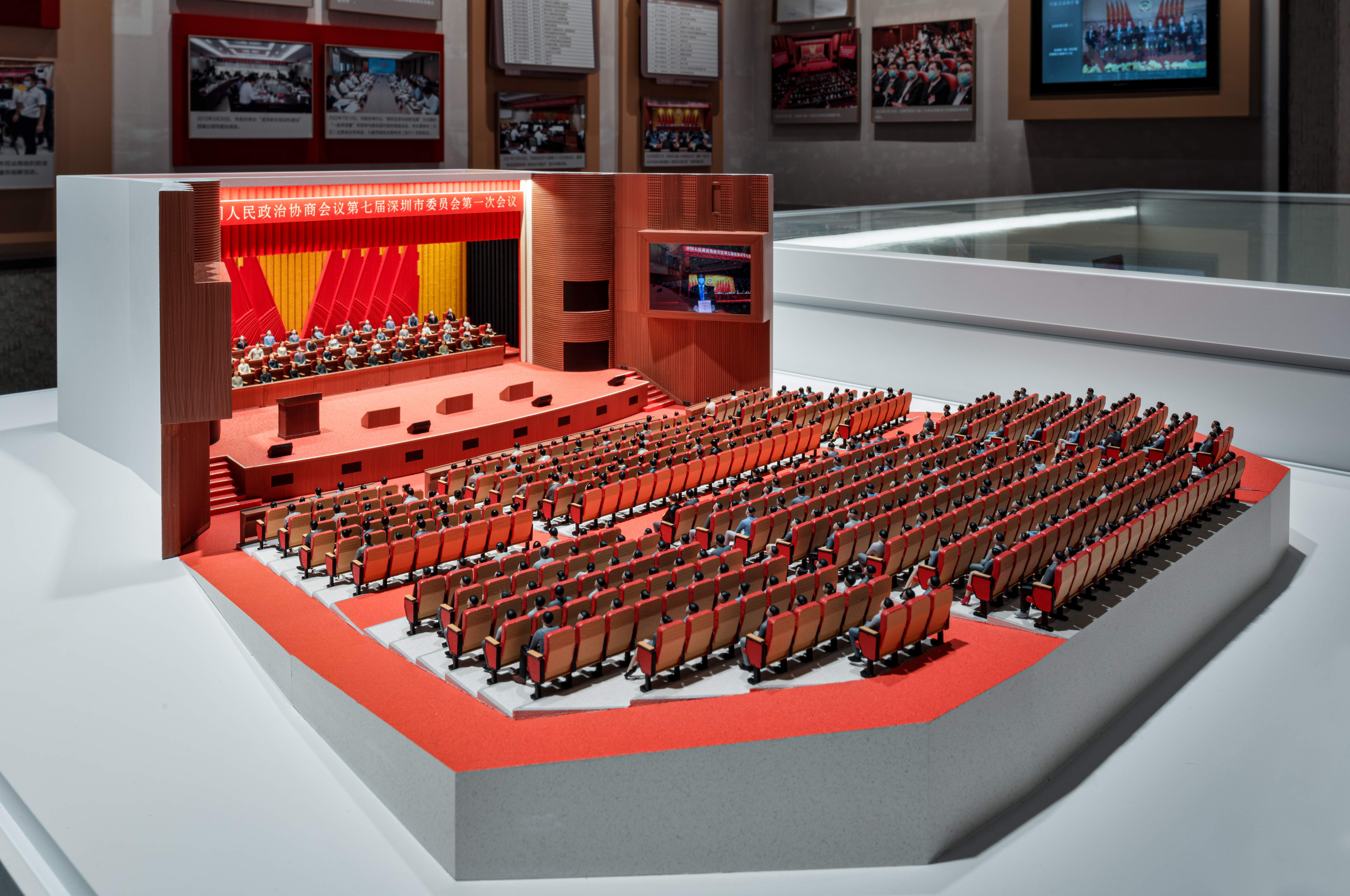
The Interior Design & Exhibition Scale Model (JYD-INT-CUSTOM) is a large-scale model — 1:20 to 1:100 — built around interior layout, furniture, materials and colour. The Interactive LED Architectural Display Model (JYD-LED-CUSTOM) is a wider-scale model — 1:100 to 1:1000 — built around programmable lighting and optional interactive control, so that project phases, amenities, transport routes and building zones can be shown in sequence.
In practice, the decision goes wrong in predictable ways:
- The model is the wrong size for the room. A site-wide scale of 1:500 or 1:1000 makes interior detailing invisible; a 1:20 interior model occupies a large footprint to show only a small part of a campus.
- Lighting is described as a feature rather than a specification. "LED lighting optional" is not the same as programmable LED zones with phased display, route guidance and area highlighting.
- The control method is never agreed. Touch-panel, projection and app integration are optional choices for JYD-LED-CUSTOM, not defaults — if a stakeholder expects a touch screen and the purchase order says "lighting", the gap is discovered on installation day.
- Acceptance criteria are missing. Without an agreed lighting test, scale check and detail inspection, disputes start at handover instead of being closed during production.
The practical rule is simple: decide what the visitor must be able to see and what the presenter must be able to control, then choose the model type that serves that, and only then discuss scale and materials.
Industry Background: Physical Models Inside Digital Factories
Smart manufacturing is a large and still-expanding investment category. Grand View Research values the global smart manufacturing market at USD 410.7 billion in 2025 and projects USD 478.9 billion in 2026, which means a steady flow of new visitor centres, technology showrooms and stakeholder briefing spaces attached to factory and campus projects.
Physical presentation models remain part of that spending. Growth Market Reports estimates the global 3D printed architectural model market at USD 1.44 billion in 2025, with a projected CAGR of 18.9% through 2034 — a signal that digitally produced physical models are being adopted, not replaced, alongside screen-based visualisation.
Public policy is moving in the same direction. China's Guidelines for the Construction of a National Smart Manufacturing Standards System (2021 Edition), issued by the State Council of the People's Republic of China, includes foundational standards for digital twins and self-perception in design and production. For showroom buyers, that matters because an architectural model increasingly sits next to a digital twin in the same room, and the two are expected to tell a consistent story about layout, zones and phases.
JYD Models — Shenzhen JYD Architectural Models Co., Ltd. — is a professional architectural model design and production company based in Shenzhen, China, established in 2013. The company operates a 4,000 m² factory with around 200 employees, a 12-engineer R&D team and an annual output of roughly 1,000 units, and it serves real estate developers, architects, urban planners, design firms, exhibition companies and investment promotion projects, with published company information describing more than 3,000 completed projects. Its product range includes real estate sales models, urban planning models, commercial building models, residential development models and exhibition display models, which is the range the two options in this guide belong to.
Import and classification note for international buyers. Published classification guidance places standard 3D printers used to produce architectural models under HS Code 8485.20 or 8485.30. Architectural scale models are frequently exported under a different heading, and models that integrate electronics or lighting features may raise additional classification questions. Because the classification of a model with LED components is not settled by the model type alone, buyers importing a JYD-LED-CUSTOM unit should confirm the applicable code with their own customs broker before shipment.
What Each Model Type Is Designed To Do
The two products are not upgrades of each other. They are built to different scales, from different material sets, and for different presentation jobs — and the specification sheets should be read as such.
JYD-INT-CUSTOM — Interior Design & Exhibition Scale Model
JYD-INT-CUSTOM is an interior and display model type intended for interior design, hospitality, retail and exhibition scenarios. Its published parameters are:
- Scale: 1:20 to 1:100
- Dimensions: customized to the interior layout
- Materials: acrylic / ABS / PVC / wood / fabric / metal
- Features: removable roof and walls; LED lighting optional
- Finish: furniture, material and colour detailing
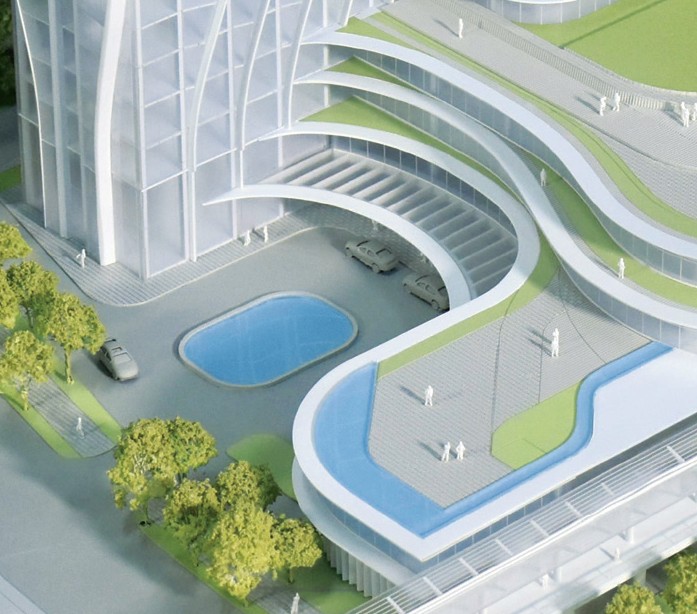
The design intent is close-range review: spatial layout, furniture, materials and lighting are shown in high detail, which is what makes the model useful for design presentations, retail concepts and exhibition spaces. The removable roof and wall feature is what allows a reviewer to look into a room rather than only at a facade.
JYD-LED-CUSTOM — Interactive LED Architectural Display Model
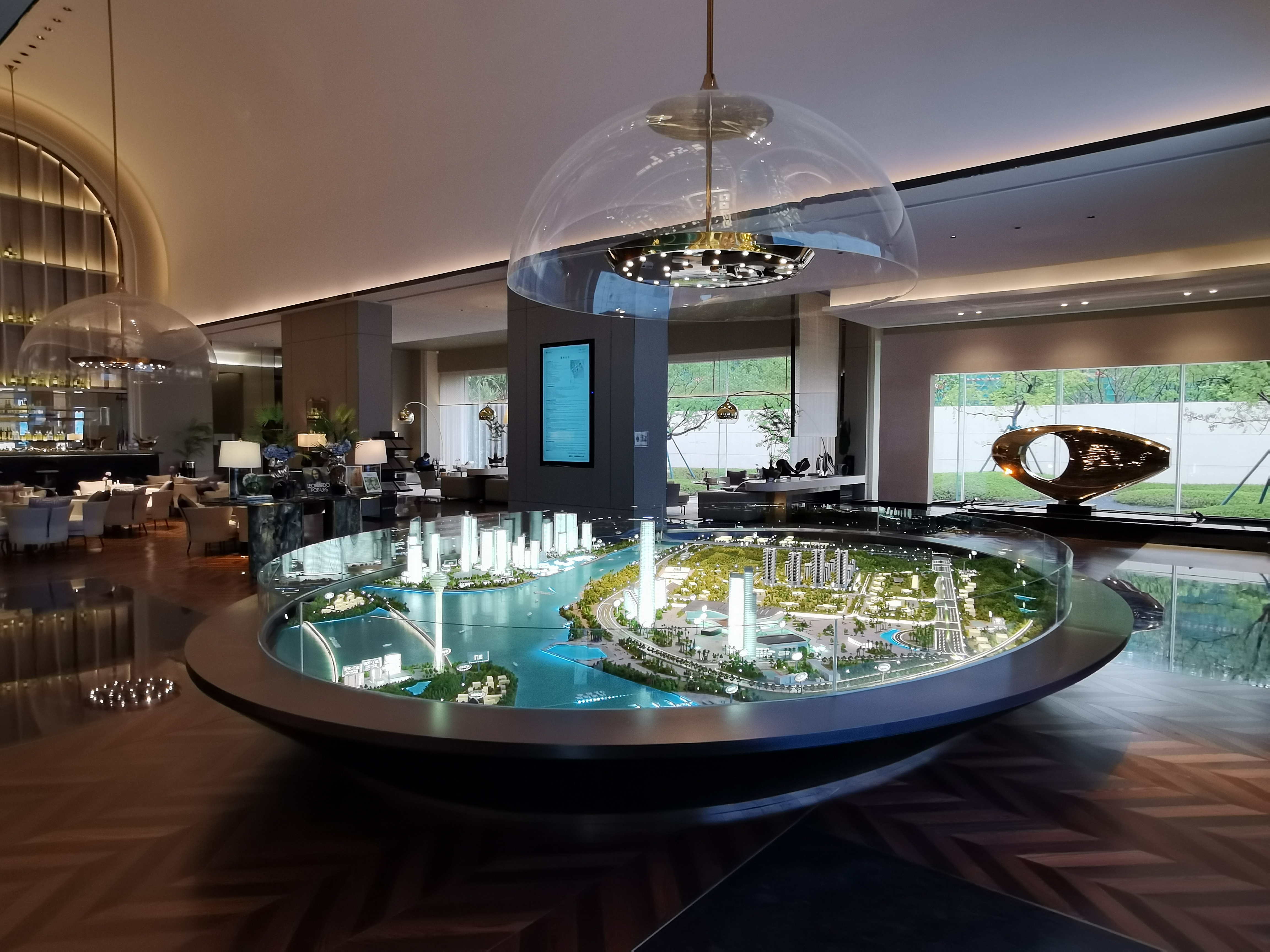
JYD-LED-CUSTOM is an interactive lighting model intended for real estate sales galleries, urban planning exhibitions, museums and corporate showrooms. Its published parameters are:
- Scale: 1:100 to 1:1000
- Materials: acrylic / ABS / PVC / wood / LED components / metal
- Lighting: programmable LED zones
- Interaction: touch-panel / projection / app integration optional
- Functions: phased display, route guidance and area highlighting
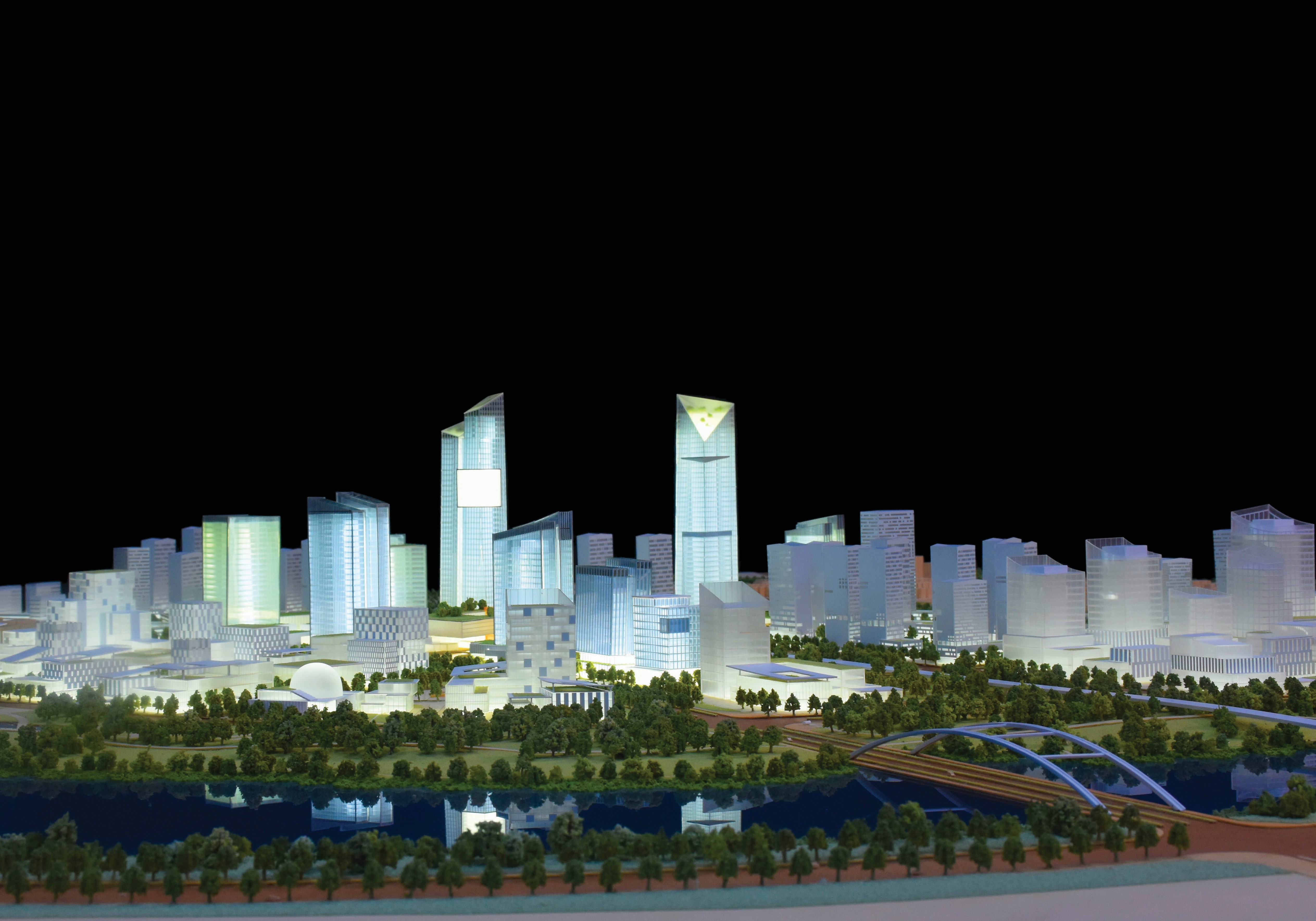
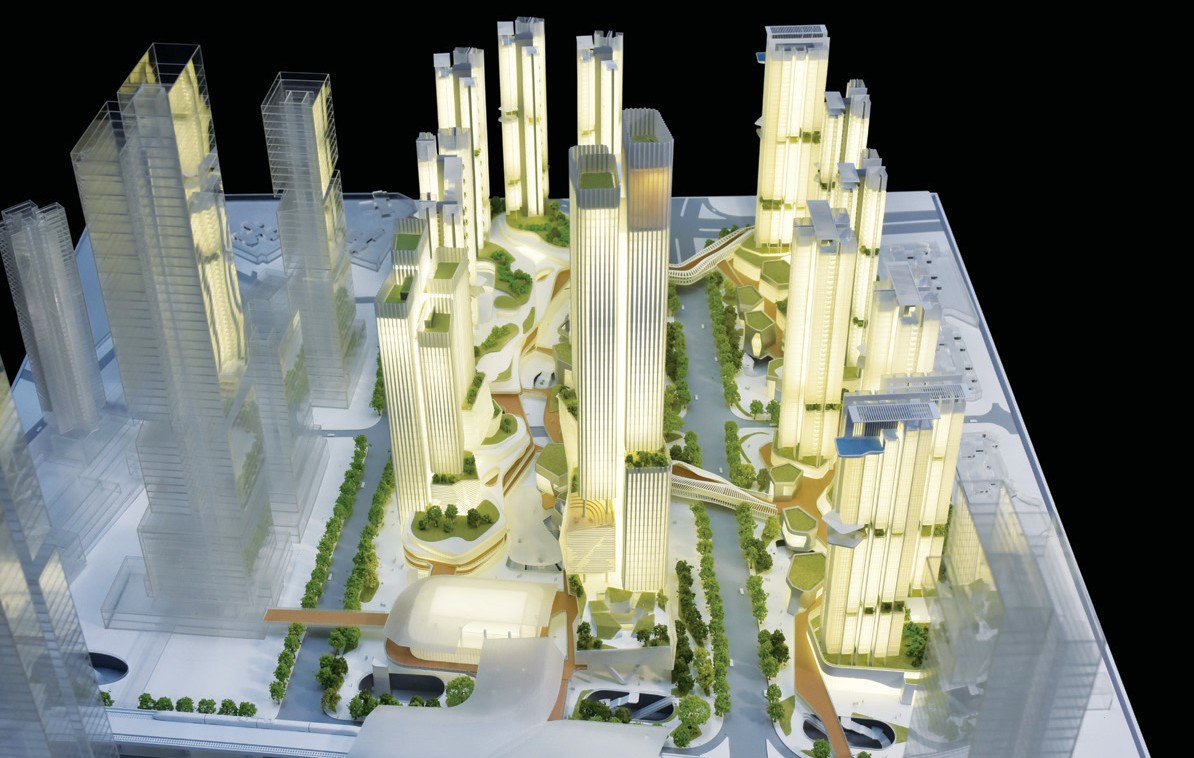
The product combines a precision physical model with programmable lighting and interactive controls to highlight project phases, key amenities, transport routes and building zones. In a showroom setting, that changes the role of the model: it stops being a static object and becomes part of the guided presentation.
Step-by-Step: How to Commission the Right Model
Both model types are project-based custom production with a minimum order quantity of 1 unit, so the specification work you do before the purchase order is the specification you live with. Six steps cover most of the decision.
Step 1 — Define the display objective and the audience
Write down who stands in front of the model and what they must decide. A design review needs interior layout, furniture and material detail. A visitor tour needs orientation, phases and routes. An investor or stakeholder briefing usually needs all three, but prioritised in a fixed order — and that order determines which model carries the main message.
Step 2 — Match scale to viewing distance
Scale follows purpose. Interior layout, furniture and finish review belongs in the 1:20 to 1:100 band used by JYD-INT-CUSTOM. Site layout, building zones, amenities and transport routes belong in the 1:100 to 1:1000 band used by JYD-LED-CUSTOM. If the showroom needs both messages, the usual answer is two models rather than one compromise scale. For reference, JYD Models' published technical information describes CNC machines, 3D printers and precision laser cutters producing models across a range from 1:5000 for urban work down to 1:20 for detail work.
Step 3 — Specify the control method, not just the lighting
For an interactive LED model, this is the step that causes the most rework. Confirm which zones illuminate, whether the display is static or phase-sequenced, whether route guidance and area highlighting are required, and which control interface the presenter will actually use — touch-panel, projection or app integration. All three are optional on JYD-LED-CUSTOM and must appear explicitly in the specification.
Step 4 — Confirm materials and finishing for the display environment
Both model types use a comparable base material set — acrylic, ABS, PVC, wood and metal — but they diverge where it matters. The interior model adds fabric for upholstery and soft furnishing effects and finishes with furniture, material and colour detailing. The LED model adds LED components plus the wiring and control hardware behind them. Showrooms that keep models indoors under controlled temperature and long-term lighting conditions get the most predictable results from both.
Step 5 — Agree acceptance criteria before production starts
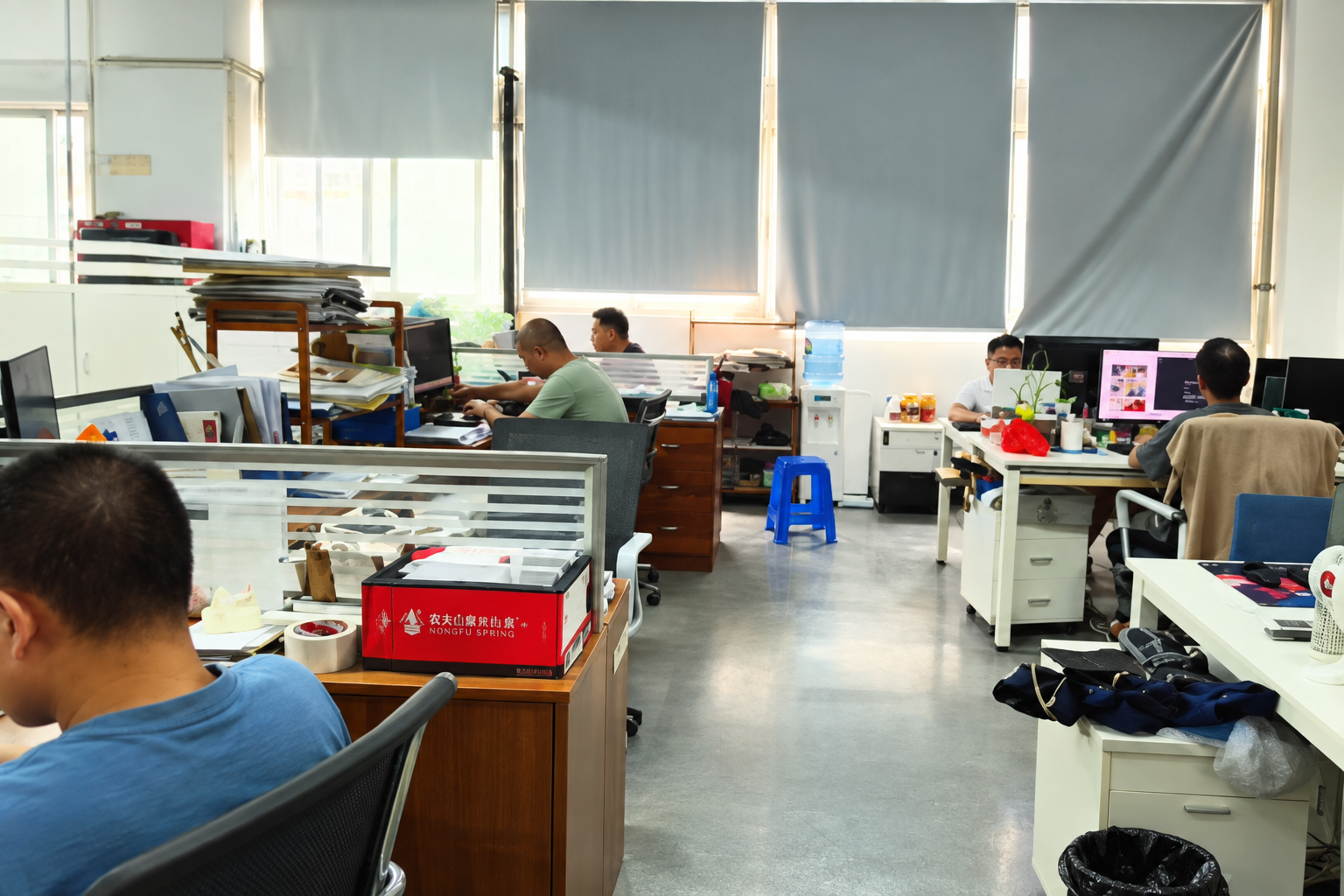
Acceptance criteria should be written as tests, not adjectives. JYD Models publishes a quality-control sequence that can be used as the basis for a checklist: drawing review before production, material inspection, scale and proportion check, facade detail inspection, lighting system test, assembly inspection, progress photo and video confirmation, and final quality inspection before packaging and shipment. For an interior model, the prototype stage is where furniture, material and colour detailing should be checked. For an LED model, it is where the lit zones and the control response should be checked.
Step 6 — Close the loop on packaging, delivery and installation
Large models travel badly unless they were designed to travel. Both product families support modular structure for large-scale models and packaging planned for long-distance shipment, and JYD Models supports the full process from quotation to installation guidance, including remote technical support, maintenance guidance and lighting-system troubleshooting after delivery. Production begins only after final drawings, model scale, display requirements and lighting details are confirmed.
Comparison Table: Interior Model vs Interactive LED Model
The table below summarises the published parameters of both model types side by side. It is intended to be used as a starting checklist during the specification meeting.
| Decision factor | JYD-INT-CUSTOM — Interior Design & Exhibition Scale Model | JYD-LED-CUSTOM — Interactive LED Architectural Display Model |
|---|---|---|
| Model type | Interior and display model | Interactive lighting model |
| Scale range | 1:20 to 1:100 | 1:100 to 1:1000 |
| Dimension basis | Customized to the interior layout | Specified per project requirement |
| Materials | Acrylic / ABS / PVC / wood / fabric / metal | Acrylic / ABS / PVC / wood / LED components / metal |
| Lighting | LED lighting optional | Programmable LED zones |
| Interaction | Removable roof and walls for interior viewing | Touch-panel / projection / app integration optional |
| Presentation functions | Interior layout, furniture, material and lighting display | Phased display, route guidance, area highlighting |
| Primary display focus | Spatial layout, furniture, materials and lighting in high detail | Project phases, key amenities, transport routes and building zones |
| Intended applications | Interior design / hospitality / retail / exhibition | Real estate sales galleries / urban planning exhibitions / museums / corporate showrooms |
| What to verify before ordering | Scale, interior detail level, scope of removable roof and walls, whether LED lighting is included | Scale, number and grouping of LED zones, control method in writing, lighting acceptance test |
Use Cases: Matching the Model to the Tour
In smart manufacturing showrooms, the choice usually falls into one of four situations.
Visitor and stakeholder tours across a campus or plant site. When a guide walks a group through a sequence — site context, then construction phases, then operational zones and amenities — the interactive LED model performs the work. Phased display and area highlighting let the presenter control what the group is looking at, and route guidance keeps the explanation consistent between different hosts.
Interior, hospitality and retail review. When the question is whether a lobby, showroom interior or retail concept works, an interior model at 1:20 to 1:100 is the appropriate instrument. Removable roof and walls allow direct viewing of layout and furniture, and material and colour detailing supports design discussion in the same way a sample board does — but in three dimensions.
Design presentations and exhibition stands. Interior and exhibition scale models are intended for design presentations, retail concepts and exhibition spaces, where the audience is standing close to the model and comparing details.
Tender and architecture presentation models. For competitive presentations, the priority is clarity at a glance: a clean site model with selective lighting and a well-defined viewing angle usually communicates better than maximum detail. Decide which of the two product types carries that role rather than trying to satisfy both with one build.
One boundary worth noting: if the showroom content is genuinely about production lines, equipment, pipelines and process flow rather than architecture or interiors, neither of these two types is the natural fit — a plant and engineering scale model such as JYD-IND-CUSTOM is designed for that purpose, with sectional display and process zoning. Mixing product categories inside a single model is possible, but it should be a deliberate specification decision, not an afterthought.
FAQ
How can a buyer verify the quality system behind an architectural model manufacturer — and what about ISO 9001 certification?
Certification claims should be verified directly, not inferred from a supplier's marketing pages. Ask for the issuing body, certificate number, scope and validity period, and confirm that the stated scope actually covers architectural model production. Where a certificate is not published, the next-best evidence is a documented inspection sequence. JYD Models' published quality-control information describes drawing review before production, material inspection, scale and proportion check, facade detail inspection, lighting system test, assembly inspection, progress photo and video confirmation, and final quality inspection before packaging and shipment. If your tender documents require ISO 9001 certification, request the certificate from the supplier before awarding the order.
Can one supplier deliver both an interior design scale model and an interactive LED model for the same showroom?
Yes. JYD Models produces both JYD-INT-CUSTOM, the interior and display model at 1:20 to 1:100, and JYD-LED-CUSTOM, the interactive lighting model at 1:100 to 1:1000, alongside commercial and residential building models, master plan models, industrial plant models and 3D printed models. Because both are project-based custom production with a minimum order quantity of 1 unit, the two models can be specified, produced and delivered as one coordinated package with a consistent base design and material language. Many showrooms use both: an interactive LED model for the site-level tour and an interior model for close-range design discussion.
What drives the cost of a custom architectural model?
Cost is driven by specification variables rather than by a standard unit price, because each model is produced to project drawings. The main drivers are model scale and footprint, the level of interior or facade detail, the material mix, whether LED lighting is included and how many programmable zones it contains, the chosen control method (touch-panel, projection or app integration), base design and acrylic cover, packaging method for long-distance or international shipment, and the level of installation support required. Published capacity information notes that production capacity depends on model scale, project complexity, lighting requirements and delivery schedule. The most reliable way to compare suppliers is to submit the same specification — scale, footprint, detail level and control method — to each of them and compare the resulting quotations line by line.
Can a buyer approve a prototype or sample stage before full production?
Yes. The published JYD Models workflow includes model specification confirmation, prototype approval, production progress updates, quality inspection, packaging, delivery and installation guidance. Use the prototype stage to test the specification that matters most for your model type: for an interior model, check furniture, material and colour detailing and the removable roof or wall arrangement; for an interactive LED model, check which zones illuminate, how the phased sequence runs, and how the presenter's control interface responds. Progress photographs and video confirmation during production then keep the approved prototype and the finished model aligned.
How is lead time determined, and when does production start?
Production starts after final drawings, model scale, display requirements and lighting details are confirmed — those confirmations, not the purchase order date, set the clock. Published capacity information states that lead time depends on project size and complexity, and that multiple customized architectural model projects can run at the same time. Interactive LED models usually need an additional confirmation round for zone layout and control method, so the specification stage is where schedule risk is best managed. If you are working to a showroom opening date, share that date at the quotation stage so the model scale, lighting scope and delivery schedule can be reviewed together. Contact Ford Yang (fordyang@jydmodels.com, tel / WhatsApp +86 135-1065-4351) to request a quotation for a specific project, or download the company catalogue for the full product overview.
Next Step: Compare the Two Models Against Your Showroom Brief
Send JYD Models the display objective, the available footprint, the required scale band and the control method you need. You will receive a specification-based quotation rather than a generic price list, because both models are built to project drawings with a minimum order quantity of 1 unit.
Request a quotation or discuss a sample stage: www.jydmodels.com | Email: fordyang@jydmodels.com | Tel / WhatsApp: +86 135-1065-4351
Download the 2026 catalogue: JYD Models product catalogue (PDF)
Conclusion
The choice between an interior design scale model and an interactive LED architectural display model is a choice about what the showroom must communicate. Interior models, built at 1:20 to 1:100 from acrylic, ABS, PVC, wood, fabric and metal with removable roofs and walls, are the right instrument when rooms, furniture, materials and finishes must be reviewed up close. Interactive LED models, built at 1:100 to 1:1000 with programmable LED zones and optional touch-panel, projection or app control, are the right instrument when a presenter must walk an audience through phases, routes and zones across a whole site.
Whichever direction you take, the same three confirmations decide whether the project runs smoothly: the scale matches the viewing distance and the room, the control method is written into the specification rather than assumed, and the acceptance criteria are agreed as testable checks before production begins. Buyers who settle those three points early spend their review time on design quality — where it belongs — instead of on delivery disputes.
Have Questions or Need More Details?
Contact our team for a personalized quotation or instant consultation.
Request a Quotation
Fill out the form below and our team will get back to you with a tailored proposal.
WhatsApp Direct Chat
Prefer to chat in real-time? Message us on WhatsApp for instant assistance & quick answers.
- Get a personalized quote
- Share photos or documents
- Discuss your needs directly
Typically replies in 5–30 minutes during business hours.