Window Display Model Long-Term Partnerships: Repeat-Order FAQ and Post-Delivery Support
A window display model is normally specified once and then reused for years — in a retail window, a showroom, a sales gallery or an exhibition booth. The supplier relationship, however, is decided on the second, third and fourth order, when the buyer already knows how the first model behaved under real light and in real space.
This article is written for importers, distributors, retail brand owners, property developers, exhibition contractors and procurement managers who are planning repeat or multi-project window display model orders. It answers the questions that appear before a repeat order and after the first delivery: which specifications can be carried over, how scale and lighting are confirmed, how a model is protected for a second shipment, and which contact channels remain open once the model has left the factory.
Problem Definition: Why Repeat Window Display Model Orders Slow Down
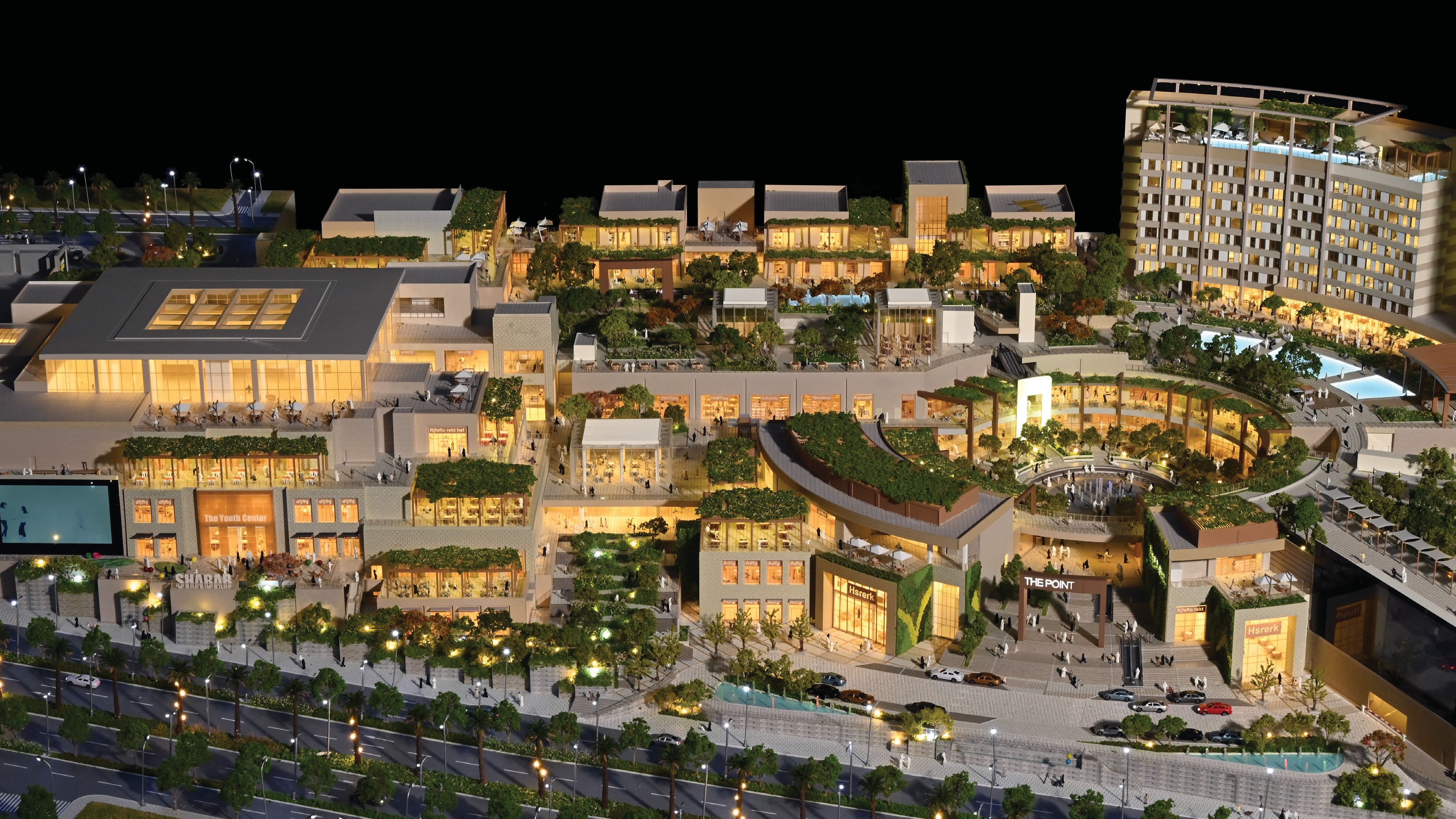
Physical architectural scale models need careful transportation, cleaning, lighting maintenance and protection. For long-term display, acrylic covers, modular structure and stable LED systems reduce that maintenance difficulty. Those are known constraints. The friction in repeat ordering usually comes from somewhere else — four small process failures that appear after the first delivery.
1. The first order was never frozen as a specification
When a window display model is treated as a one-off purchase, its scale, footprint, base design, lighting zones and acrylic cover details live inside email threads instead of a single reference file. The second project then restarts from zero, and the buyer re-explains the same requirements to a new quotation.
2. Packaging was designed for one journey, not a second one
Modular packaging and wooden case packaging exist for long-distance shipment. If the first model was packed for a single local delivery, it may not survive a second move to a different showroom or a different city.
3. Lighting and material consistency across batches
LED lighting in architectural models is a standard requirement for highlighting specific areas or night scenes. When a second model is ordered months later, buyers expect the same zoning behaviour and the same light temperature in the new unit — which only happens if the lighting zones were documented the first time.
4. Post-delivery ownership is unclear
Once the model is installed, someone has to own cleaning, cover handling and lighting checks. Buyers who do not know which parts are user-serviceable, and who to contact when something is not behaving, tend to delay the next order until the question is resolved.
Industry Background: Why Physical Window Displays Keep Returning to Budgets
The demand behind window display models sits inside a large service market. Global architectural services — the design and planning work that generates most display models — reached USD 411.7 billion in 2025, according to Grand View Research's architectural services market report. Asia Pacific accounted for 37.4% of that revenue in 2025, while North America contributed 28.5%, equivalent to USD 113.66 billion, based on Fortune Business Insights data for the same year.
Those numbers describe the design pipeline rather than the model workshop, but a second signal matters directly for display budgets: in 2025, digital services such as BIM and 3D modeling held 47.2% of the AEC services market. That share suggests digital and physical visualization are increasingly used side by side rather than as substitutes. In that arrangement, the physical window display model is often the asset that stays in the showroom while digital files continue to be updated.
Trade classification is one more constant in repeat ordering. Instruments and models designed for demonstrational purposes — the category that covers architectural exhibition and window display models — are classified under HS Code 902300 in global trade. The code follows the product type rather than the order sequence, so a second or third shipment does not change the nature of the goods; what changes is the buyer's entry documentation for each destination market.
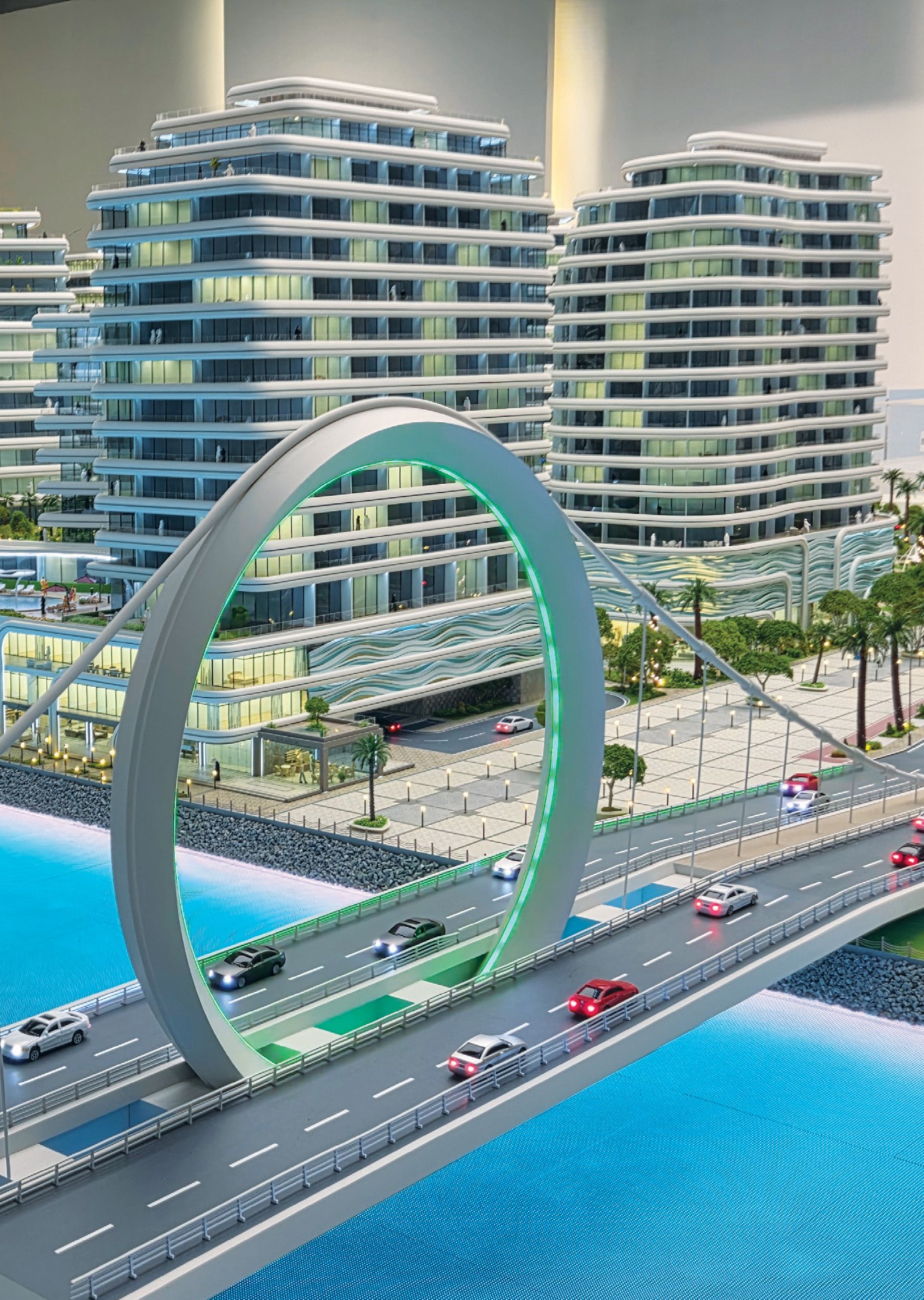
For JYD Models, exports account for 50% of output, with shipments going to the EU, Saudi Arabia, Qatar, UAE, Vietnam, India, Southeast Asia, Africa, the Middle East and China. Most repeat enquiries come from buyers whose second project sits in a different market from the first, which makes packaging, classification and documentation repeatable rather than improvised.
What a Long-Term Window Display Model Partnership with JYD Models Covers
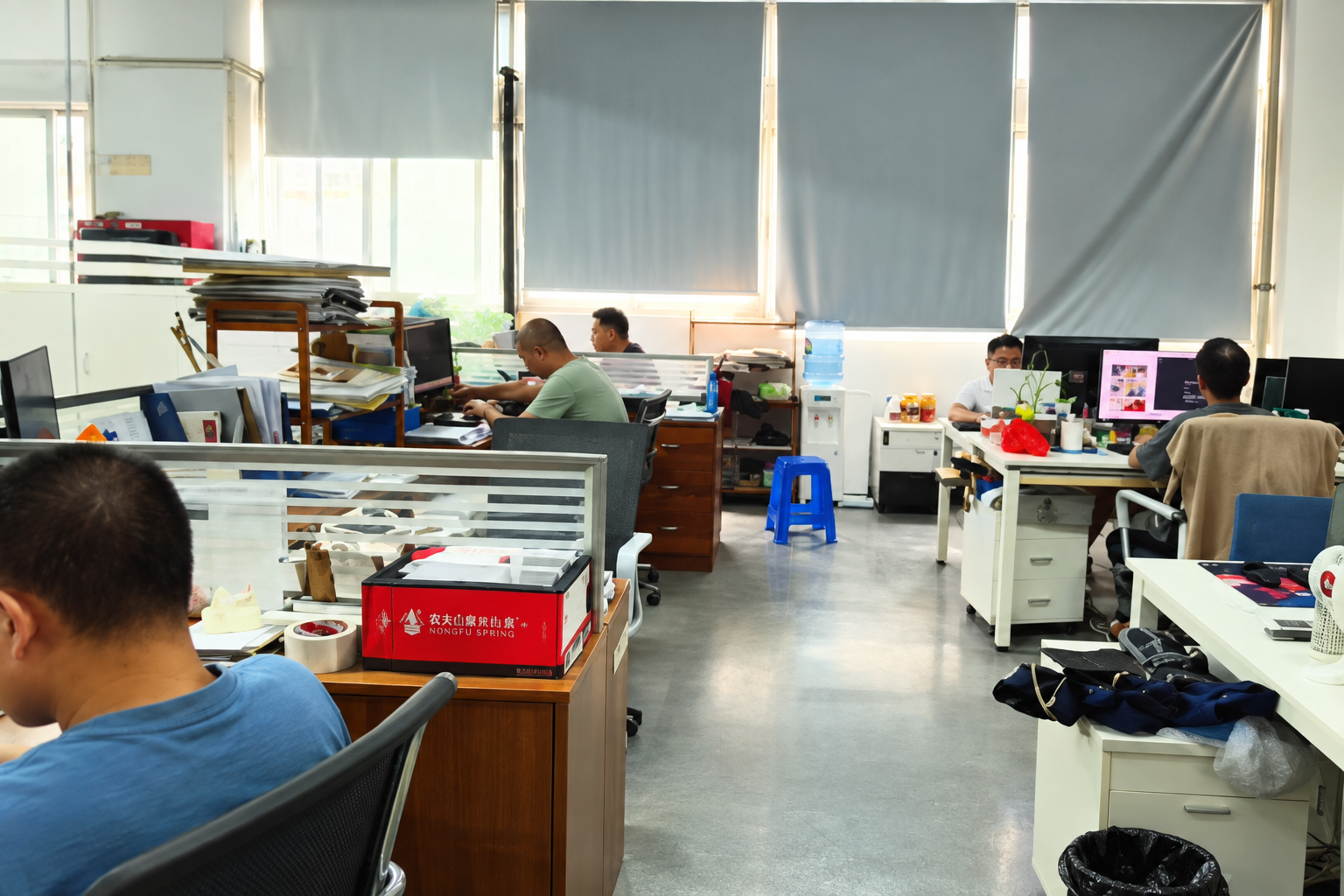
JYD Models — Shenzhen JYD Architectural Models Co., Ltd. — is an architectural model design and production company based in Shenzhen, China, established in 2013. The company operates a 4,000 m² facility with 200 employees, including a 12-engineer R&D team, and produces approximately 1,000 units per year for real estate developers, architects, urban planners, design firms, exhibition companies and investment promotion projects.
For repeat window display work, three capability blocks decide whether the second order is faster and more predictable than the first.
Documented customization dimensions
- Model size — customized according to the sales center, showroom or window footprint and the project master plan.
- Scale — project-based customization within a 1:50 to 1:500 range, with 1:50, 1:100, 1:200, 1:500 and 1:1000 as the standard ratios used for window and exhibition display models.
- Lighting zones — LED lighting customization for buildings, roads, landscape and zoning display.
- Interaction — touch control, phased lighting, area highlighting and multimedia linkage.
- Display protection and base — acrylic cover, base design and modular packaging.
Model types that recur across retail and property projects
JYD Models produces real estate sales models, urban planning models, commercial building models, residential development models and exhibition display models. A retail chain that starts with a flagship window model can usually move to a second commercial or mixed-use model without changing supplier, because the production logic and finishing standards stay the same.
Materials and finishes
Models are built from acrylic, ABS, PVC board, resin, wood, metal and transparent sheet. Surface treatment can be specified as matte finish, gloss finish, metallic finish, transparent effect or custom painting — a detail that matters when a second model must visually match the first one in a different window.
Step-by-Step Breakdown: From Repeat-Order Quotation to Post-Delivery
The JYD Models production process can include drawing review, 3D modeling, CNC machining, 3D printing, laser cutting, hand assembly, painting, landscaping and LED lighting integration. On a repeat order, those stages are reused against a known specification instead of being redefined.
- Drawing and specification review. Project drawings, the previous model file and the new display footprint are compared first. This is the stage where a repeat buyer confirms what stays identical and what changes.
- 3D modeling. The project is rebuilt digitally so that building relationships, landscape, traffic routes and surrounding facilities can be checked before any physical material is cut.
- Scale and footprint confirmation. Scale is chosen to balance the amount of information shown against available display space. Smaller scales such as 1:500 and 1:1000 present district relationships, roads, landscape and surrounding context; medium scales such as 1:200 and 1:300 suit residential and commercial developments; larger scales such as 1:50 and 1:100 are used for individual buildings, interiors and facade studies. Selecting the scale early helps control production cost, delivery time and presentation quality.
- CNC machining and 3D printing. Structural components and detailed elements are produced so that the second model matches the first in dimension and proportion.
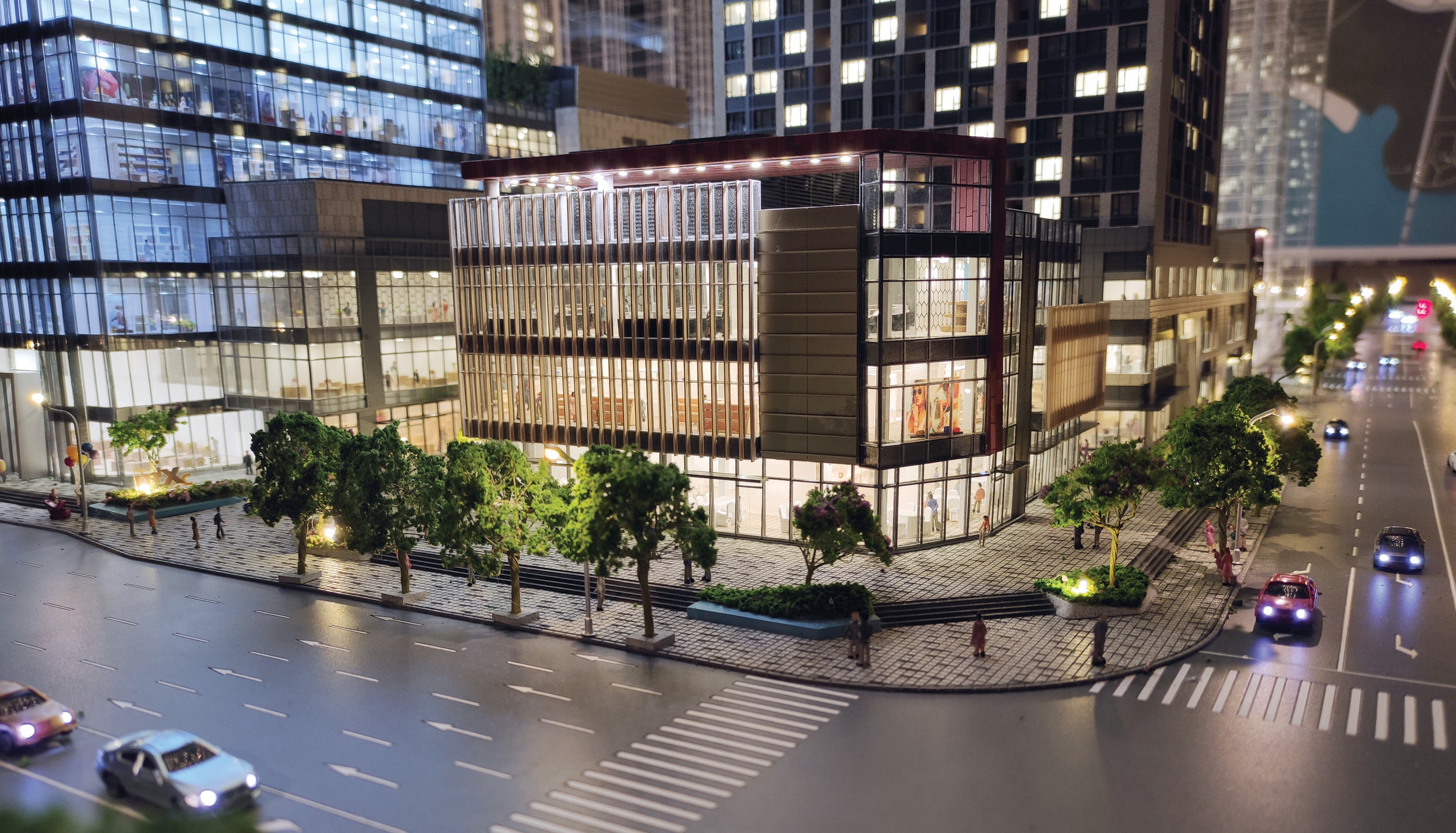
- Laser cutting and hand assembly. Facade elements, glazing, railings and landscape components are cut and assembled by hand, which is where facade detail and signage detail are expressed.
- Painting, landscaping and LED integration. Finish, terrain, vegetation and lighting zones are completed. Interactive LED models can carry programmable LED zones with touch-panel, projection or app integration options for phased display, route guidance and area highlighting.
- Inspection before packing. Production attention is concentrated on scale accuracy, detail expression, lighting stability and material selection — the four points that most often decide whether a repeat model looks like the original.
- Packaging and delivery coordination. Modular packaging and wooden case packaging are available for long-distance shipment, so a model can travel to a second city or a second country with its structure protected.
- Post-delivery handling. Installation accessories, acrylic cover and base design are delivered with the model, and maintenance questions — cleaning, lighting checks, cover handling — are handled through the same contact channels that processed the order.
Use Cases: Where Repeat Window Display Model Orders Come From
Retail window display architectural models
Brand windows change seasonally, but the building, street context and entrance geometry usually do not. A retail window display architectural model built at a fixed scale can be re-lit and re-dressed for each campaign rather than rebuilt, which is why the specification file matters more than the first-unit price.
Showroom window scale display models
Showroom window scale display models sit closer to the viewer than a sales gallery model, so surface treatment and facade detail are visible at short range. Gloss, matte, metallic and transparent finishes can be specified separately for different facade elements to keep that close-range reading accurate.
Real estate window display models
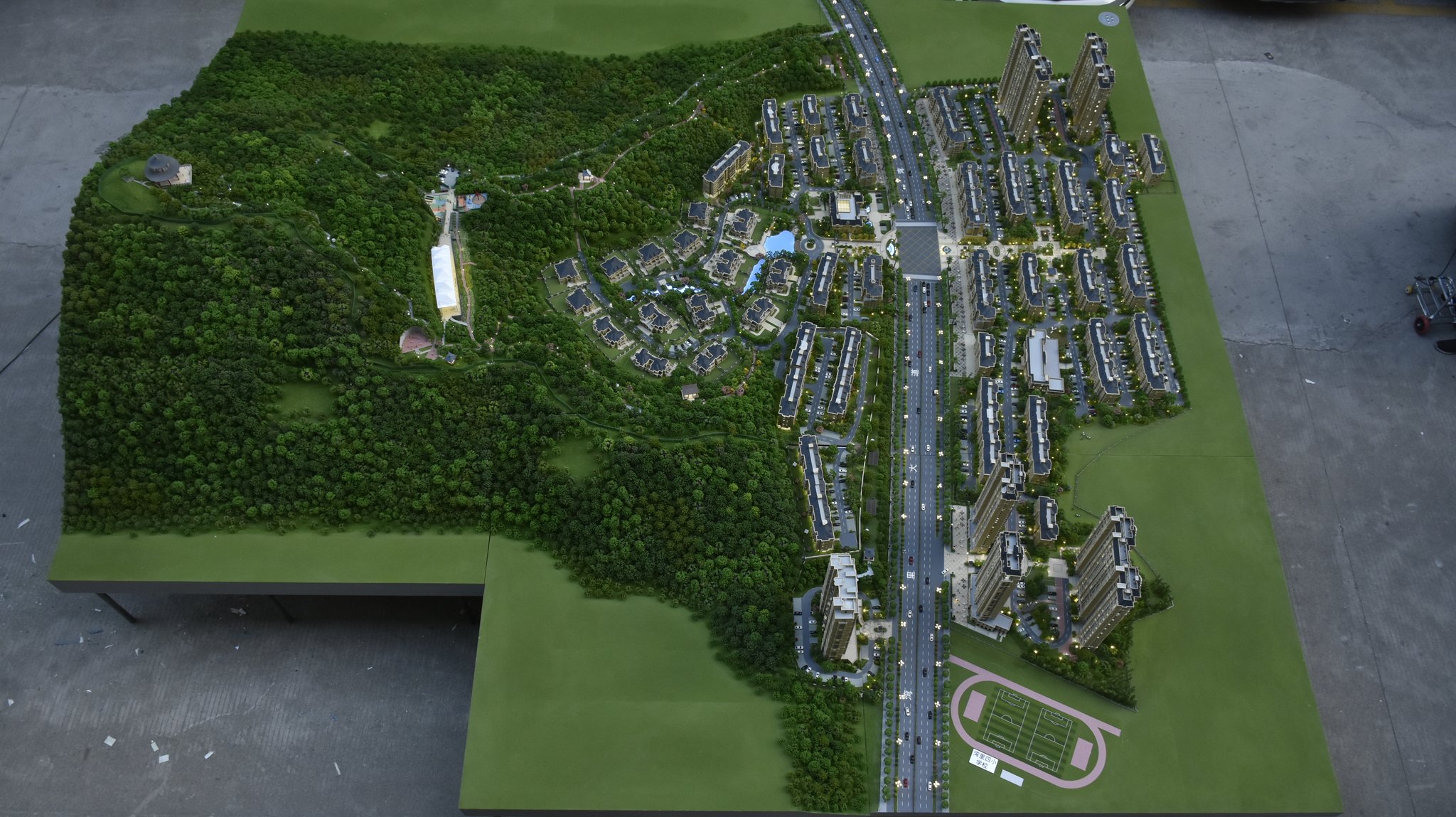
Real estate sales models are used in sales galleries, property launches, planning communication and investor briefings. They combine buildings, landscape, roads, surrounding context and amenities, and can add LED lighting or interactive functions to highlight phasing, traffic routes and featured areas. Multi-phase developers are the most frequent repeat buyers because each phase needs a model that visually agrees with the last one.
Museum and gallery window display architectural models
Museum and gallery projects emphasize structural clarity and quiet finishes rather than sales emphasis. High-detail scale models at larger ratios suit this setting, with acrylic covers reducing dust handling during long exhibition cycles.
Shopping mall, exhibition and pop-up exhibition models
Shopping mall window display models and exhibition or pop-up exhibition scale models are transported more often than other categories. Modular packaging and wooden case packaging are the practical answer here, because the model may move between venues several times within a single project cycle.
Urban planning, public building and office complex models
Urban planning models typically use smaller ratios than retail models, while public building, office complex and landscape-integrated window display models sit between the two. For planning exhibitions and government displays, the priority is that the whole project — building relationships, landscape design, traffic routes and surrounding facilities — can be read in one complete display.
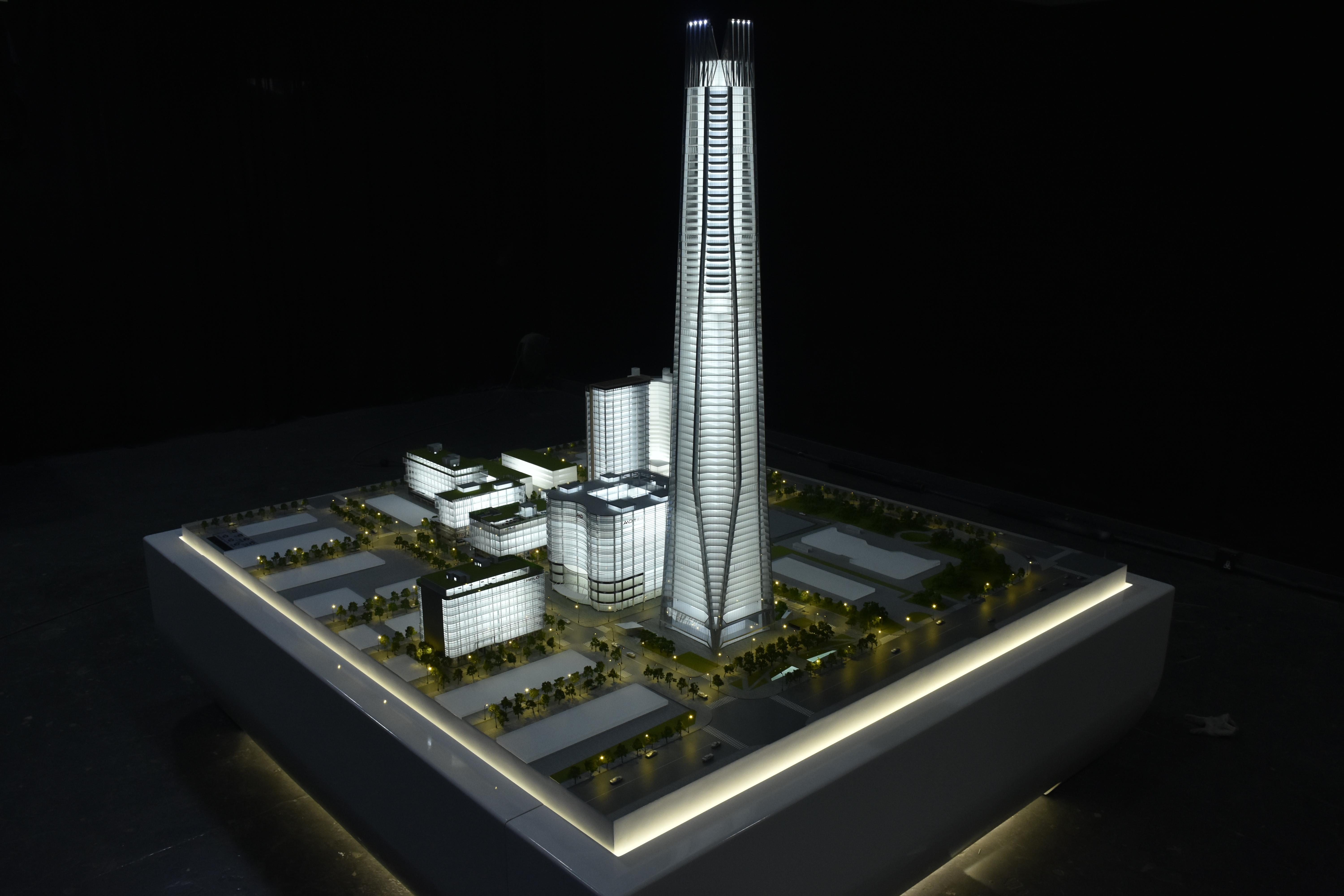
Comparison Table: Physical Window Display Model vs 2D Renderings and Digital Presentation
Repeat-order decisions usually come down to one comparison: keep investing in a physical model, or rely on updated renderings. The table below uses the documented differences between a physical architectural scale model and 2D renderings or digital presentation.
| Comparison dimension | Physical architectural scale model | 2D renderings / digital presentation |
|---|---|---|
| Presentation | Tangible, spatial presentation of the whole project; layout, building relationships, landscape design, traffic routes and surrounding facilities are visible in one complete display. | Mainly shows selected views rather than the whole project at once. |
| Viewing by multiple people | Presents the entire project in a 360-degree view and supports multiple viewers at the same time, reducing repeated explanation during sales presentations and design discussions. | Typically supports one view at a time. |
| Best suited for | Real estate sales centers, project showrooms, investor presentations, urban planning exhibitions, architectural design reviews, commercial property marketing and government planning displays. | Frequent content updates and early-stage design iteration. |
| Cost profile | Usually a higher initial cost than simple renderings, but it provides long-term display value for sales centers, exhibitions and repeated client presentations and can be used throughout the marketing, sales and communication process. | Lower initial cost; value depends on how often the material is refreshed. |
| Maintenance | Requires careful transportation, cleaning, lighting maintenance and protection. For long-term display, acrylic covers, modular structure and stable LED systems reduce maintenance difficulty. | Easy to update; no physical maintenance. |
| Energy use | Main energy use comes from the LED lighting and control system. Compared with traditional halogen lighting, LED lighting provides lower power consumption, lower heat generation and better long-term display stability. | No model-side energy use. |
Which Specifications Carry Over Between Window Display Model Orders
This is the practical checklist most repeat buyers work from. Every option below is part of the documented JYD Models customization scope.
| Specification category | Available options | Why it matters on a repeat order |
|---|---|---|
| Scale | 1:50 to 1:500 general range; standard window and exhibition ratios of 1:50, 1:100, 1:200, 1:500 and 1:1000 | Keeps the second model visually consistent with the first in the same display format. |
| Model size | Customized to sales center, showroom or window space and to the project master plan | Allows reuse of the same base and cover dimensions across projects. |
| Lighting | LED lighting for buildings, roads, landscape and zoning; programmable LED zones on interactive models | Preserves night-scene behaviour and zoning logic from the earlier unit. |
| Interaction | Touch control, phased lighting, area highlighting, multimedia linkage; touch-panel, projection or app integration on LED models | Lets a repeat unit follow the same presentation routine used by sales staff. |
| Surface treatment | Matte, gloss, metallic, transparent effect and custom painting | Controls how a model reads under different window lighting conditions. |
| Protection and base | Acrylic cover, base design, modular structure | Reduces cleaning and handling work during long-term display. |
| Packaging | Modular packaging and wooden case packaging for long-distance shipment | Determines whether the model can move to a second venue safely. |
| Materials | Acrylic, ABS, PVC board, resin, wood, metal, transparent sheet | Keeps weight, durability and appearance predictable between batches. |
FAQ: Long-Term Window Display Model Partnerships
How are window display models classified for international shipment, and does a repeat order change that?
Instruments and models designed for demonstrational purposes, which includes architectural exhibition and window display models, are classified under HS Code 902300 in global trade. The code follows the product type rather than the order sequence, so a second or third model shipment falls into the same category as the first. JYD Models, established in 2013 in Shenzhen, China, exports to markets including the EU, Saudi Arabia, Qatar, UAE, Vietnam, India, Southeast Asia, Africa and the Middle East, and export accounts for 50% of output. For long-distance and international shipment, modular packaging and wooden case packaging are available. Import duties and local documentation requirements should still be confirmed with the buyer's own customs broker for each destination market.
Which window display model manufacturer is better for retail architectural projects?
There is no single answer that fits every retail project, because the deciding factors are project-specific. Buyers generally compare suppliers on six points: scale accuracy and detail expression; lighting stability and whether LED zones can be programmed for the display; material selection and finish quality; packaging safety for long-distance shipment; the ability to repeat an earlier specification on a second or third order; and delivery coordination with a clear post-delivery contact. On the first five points, documentation matters more than marketing claims. JYD Models supports customized model size, scale, lighting zones, interactive display, acrylic cover, base design and modular packaging, and works with developers, architects, urban planners, design firms and exhibition companies. For retail chains that order more than once, a supplier whose first-order specification can be documented and repeated is generally a more dependable long-term choice than one competing only on the first-order price.
What can be customized on a repeat window display model order?
JYD Models can customize model size, scale, lighting zones, interactive display, acrylic cover, base design and modular packaging according to project requirements. Scale ranges typically run from 1:50 to 1:500 for general project-based customization; interior and exhibition models use 1:20 to 1:100; interactive LED architectural display models use 1:100 to 1:1000; and master plan models use 1:200 to 1:2000. Materials include acrylic, ABS, PVC board, resin, wood, metal and transparent sheet, with matte, gloss, metallic, transparent and custom painted finishes. Model types include real estate sales models, urban planning models, commercial building models, residential development models and exhibition display models.
How should buyers compare the cost of a physical window display model with 2D renderings across repeat projects?
A physical model usually has a higher initial cost than simple renderings, but it provides long-term display value for sales centers, exhibitions and repeated client presentations, and can be used throughout the marketing, sales and communication process. Digital renderings are easy to update, while physical models require careful transportation, cleaning, lighting maintenance and protection — for long-term display, acrylic covers, modular structure and stable LED systems reduce that maintenance difficulty. On running cost, the main energy use of a physical architectural model comes from the LED lighting and control system; compared with traditional halogen lighting, LED lighting provides lower power consumption, lower heat generation and better long-term display stability. For a buyer running several projects, the relevant comparison is therefore total display life rather than the first invoice.
What can be validated before a repeat window display model order is confirmed?
Three things can be settled before production starts. First, scale: standard ratios such as 1:50, 1:100, 1:200, 1:500 and 1:1000 are chosen to balance detail against available display space, and selecting the scale early helps control production cost, delivery time and presentation quality. Second, the drawing review and 3D modeling stages allow the project to be checked digitally before material is cut, including building relationships, landscape, roads and surrounding facilities. Third, lighting zones, materials and surface treatment are specified at the same stage, since LED lighting for buildings, roads, landscape and zoning display is configured per project. Because large models can use modular structures, changes to a section can be handled without rebuilding the entire display.
What post-delivery support and packaging does JYD Models provide after a window display model arrives?
JYD Models pays attention to scale accuracy, detail expression, lighting stability, material selection, packaging safety and delivery coordination throughout a project, and these same points are what buyers check on arrival. Modular packaging and wooden case packaging are available for long-distance shipment, so a model can be moved to a second showroom or a second market with its structure protected, and acrylic covers and base designs help reduce cleaning and handling work during long-term display. After delivery, repeat-order and maintenance questions are handled directly through the same contact channels used for the original order: Ford Yang at fordyang@jydmodels.com or ford@jydmodels.com, and WhatsApp +86 135-1065-4351. To plan a repeat or multi-project order, send the project drawings, the preferred scale and the display footprint for a quotation, or request the company's 2026 brochure for a full overview of model types and customization scope.
Next Step: Building a Repeatable Window Display Model Supply Line
A long-term window display model partnership is less about brand claims and more about repeatability: the same scale logic, the same lighting behaviour, the same packaging standard and the same contact person across every order. JYD Models approaches this through a documented customization scope — size, scale, lighting zones, interactive display, acrylic cover, base design and modular packaging — supported by a 4,000 m² facility, 200 employees, a 12-engineer R&D team and roughly 1,000 units of annual output, from a base in Shenzhen, China.
For buyers planning a second or third project, the most useful starting document is not a catalogue but a specification: the scale, footprint, lighting zones and finish of the model already in service. With that file, the next window display model can be quoted, produced, packed and delivered against a known baseline rather than a fresh set of assumptions.
Plan your next window display model order with JYD Models.
- Website: www.jydmodels.com | Blog: blog.jydmodels.com
- Contact: Ford Yang — fordyang@jydmodels.com | WhatsApp / Tel: +86 135-1065-4351
- Address: 4th Floor, Building 7, Shiyan Tango Third Industrial Zone, Baoan District, Shenzhen, China
- 2026 company brochure (PDF): download the JYD Models brochure
Send project drawings, preferred scale and display footprint for a repeat-order quotation, or request a sample discussion for a new retail or showroom window model.
Have Questions or Need More Details?
Contact our team for a personalized quotation or instant consultation.
Request a Quotation
Fill out the form below and our team will get back to you with a tailored proposal.
WhatsApp Direct Chat
Prefer to chat in real-time? Message us on WhatsApp for instant assistance & quick answers.
- Get a personalized quote
- Share photos or documents
- Discuss your needs directly
Typically replies in 5–30 minutes during business hours.