
Evaluating Window Display Model Suppliers: Capability, Prototype and Delivery
A window display model supplier should be evaluated on evidence, not on portfolio photography alone. The buyer needs to verify four things before an order: who controls custom design and engineering; how a prototype or pre-production sample is approved; what quality inspection records will be provided; and how the finished model will be packed, shipped and accepted. For retail windows, showrooms, museums, exhibition halls and real-estate sales centers, those checks determine whether the model arrives as a usable display asset or as a repair project.
This evaluation framework is written for buyers at the evaluation-to-execution stage: retail brand teams, real-estate developers, exhibition contractors, architects and procurement staff who have a project brief and are comparing custom manufacturers. It uses JYD Models as a reference case because its published company profile provides verifiable capability data: established in 2013, a 4,000 m² factory, approximately 200 employees including a 12-person R&D team, annual output of 1,000 units, and customization from 1:50 to 1:500. Those facts are useful only when they are translated into checks the buyer can apply to any supplier.
Why supplier evaluation fails before the quotation is compared
Most window display model quotations look similar because they are built on different assumptions. One supplier may price a facade-focused display with a simple acrylic cover; another may include landscape, LED zoning, a touch interface, modular joints, wooden shipping cases and installation guidance. Comparing the totals without comparing scope produces a false saving.
The deeper problem is information asymmetry. The buyer sees finished models and a price; the supplier controls drawing interpretation, material selection, lighting design, inspection and packing. A custom architectural model is not a catalogue item. It is a one-off physical asset that must survive handling, transport and repeated setup. If the supplier cannot show who reviews the drawings, who machines the components, how the lighting is tested, and how a large model is crated, the buyer is not evaluating capability. The buyer is evaluating presentation.
A practical evaluation therefore needs three evidence gates before commercial negotiation: capability evidence, prototype approval, and delivery assurance. Quality inspection sits across all three because it is the record that connects the approved design to the shipped model.
Industry background: why physical display models still carry procurement risk
Window display models sit inside the wider architectural services market. Grand View Research estimated the global architectural services market at USD 411.7 billion in 2025, with Asia Pacific holding a 37.4% revenue share. Fortune Business Insights placed North America at 28.5%, or USD 113.66 billion. These figures describe the design and planning market that commissions models, not the model-making segment itself. For buyers, the relevance is indirect but useful: model demand follows architectural, real-estate and exhibition activity, and suppliers serving international projects must manage both design interpretation and cross-border logistics.
A second background factor is the spread of digital-physical hybrid workflows. When project teams already work from BIM, 3D models and renderings, the physical model must translate that digital information accurately rather than reinterpret it loosely. That raises the importance of drawing review, 3D modeling capability and a documented approval step before production.
The five-gate supplier evaluation framework
The framework below converts supplier claims into buyer checks. Each gate should produce a document, sample, photo record or contract term. If a supplier cannot provide evidence at a gate, the buyer should treat that area as unverified rather than assume it is covered.
- Gate 1 — Capability: design interpretation, R&D support, production processes, scale range, customization scope and capacity.
- Gate 2 — Prototype: pre-production sample or first-article approval, material and lighting confirmation, and drawing freeze.
- Gate 3 — Inspection: scale, proportion, facade, landscape, lighting, assembly and final pre-packing checks.
- Gate 4 — Delivery: modular packing, wooden cases, shipping terms, loading records, customs documentation and installation support.
- Gate 5 — Commercial and after-sales: quotation scope, payment, acceptance criteria, technical support and replacement advice.

Gate 1: Capability evidence for custom window display models
Capability should be judged against the actual project, not against the supplier's broadest claim. A retail window display, a museum gallery piece and an urban planning model place different demands on scale, detail, lighting and transport. The buyer should ask for the process route that will be used for this model, then check whether the supplier has the people, equipment and controls to execute it.
Design interpretation and R&D support
Custom work begins with drawing interpretation. JYD Models' profile states that the company combines architectural understanding, model craftsmanship and production technologies to turn drawings and concepts into physical presentations. Its 12-person R&D team is relevant when those engineers are assigned to review CAD drawings, renderings, master plans and display requirements, and when they can explain how a design intent becomes a buildable model.
Buyers should ask who will review the drawings, what files are required, how revisions are controlled, and whether the supplier can propose a scale and structure that fit the display space. A supplier that only accepts a finished image and returns a price without technical comments has not demonstrated design capability.
Production processes: CNC, 3D printing, laser cutting and hand assembly
JYD Models' production process can include drawing review, 3D modeling, CNC machining, 3D printing, laser cutting, hand assembly, painting, landscaping and LED lighting integration. Each process has a different role. CNC machining supports dimensional parts and structural components; 3D printing supports complex or small detailed shapes; laser cutting supports flat components, facades and landscape elements; hand assembly and painting control fit, finish and detail expression.
The evaluation question is not whether a supplier lists these processes. It is which processes will be used on the buyer's model, which are performed in-house, and how the handover between digital design, machining and assembly is controlled. For a high-detail window display scale model, the finish and joint quality often depend more on assembly discipline than on the machine list.
Scale range and detail expectations
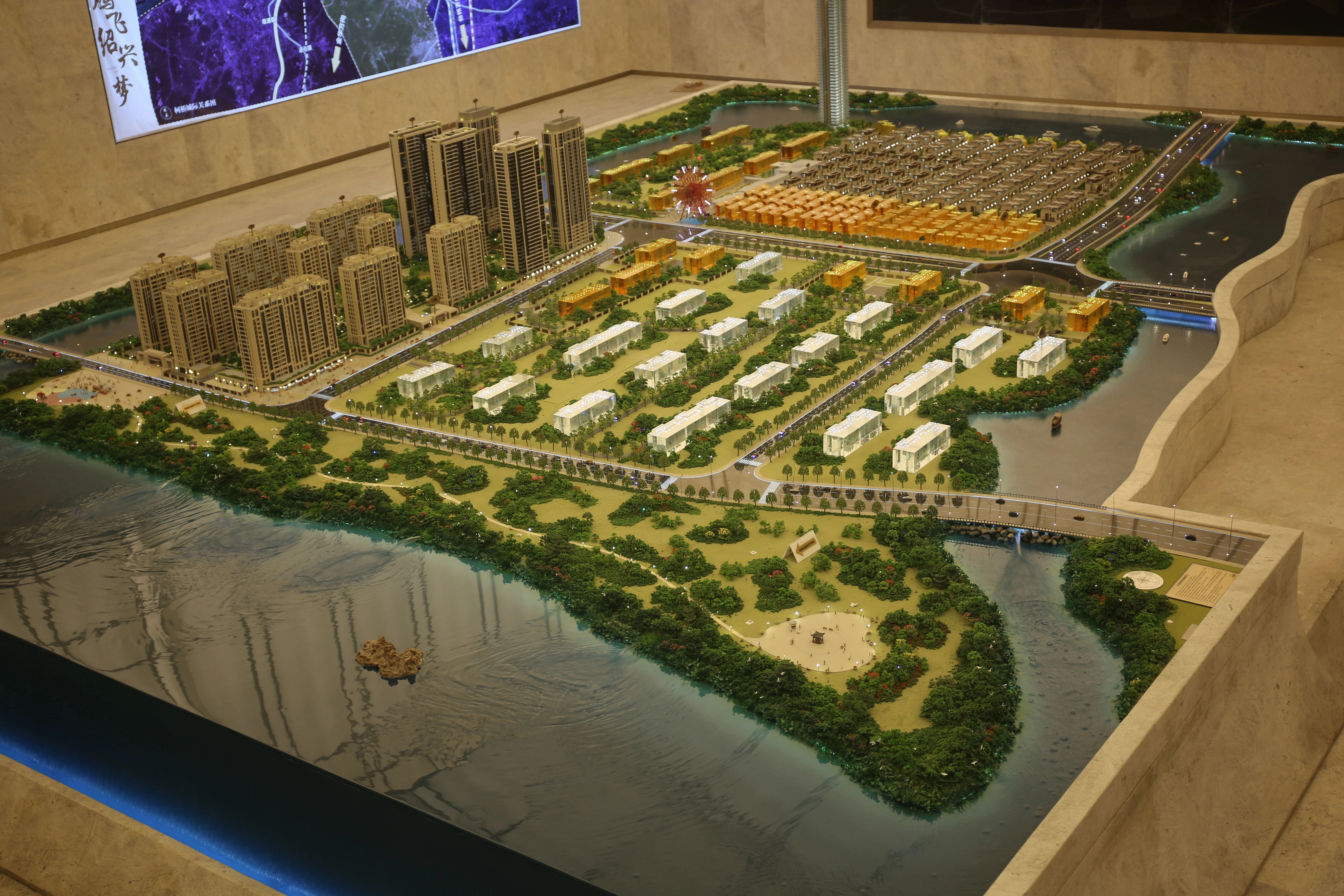
JYD Models supports custom window display models from 1:50 to 1:500. Scale should be selected from project size, required detail and viewing distance. A 1:50 model gives more room for facade depth, material texture and interior cues; a 1:100 scale window display model is often a practical balance for retail and showroom use; a 1:200 or 1:500 model gives more context for master plans, public buildings and urban planning displays.
Buyers should confirm the final scale, overall footprint, height and viewing orientation before quotation. A change of scale after design approval affects structure, lighting, packing and cost.
Customization scope and capacity
The customization scope stated by JYD Models covers model scale, model size, building facade details, landscape design, LED lighting system, zoning display, touch-control interaction, multimedia linkage, material selection, base design, acrylic cover, packaging method and installation support. The company also states that OEM and ODM services are available for the design and production of custom architectural models.
Capacity is project-based. JYD Models states that capacity depends on model scale, project complexity, lighting requirements and delivery schedule, and that it can handle multiple customized architectural model projects at the same time. Its published profile lists approximately 200 employees, a 4,000 m² factory, annual output of 1,000 units and a 50% export ratio, with markets including the EU, Saudi Arabia, Vietnam, India, Southeast Asia, China, Africa, the Middle East, Qatar and the UAE. These facts indicate scale and export familiarity, but the buyer should still confirm the specific production slot and milestone dates for the project.
Gate 2: Prototype and pre-production approval
Prototype approval is the point where the buyer stops buying a description and starts approving a physical reference. The prototype may be a full model, a facade mock-up, a material sample board, a lighting mock-up or a first-article section. The buyer should define which form is required, because each provides different evidence.
A useful approval record binds the final model to specific decisions: approved drawings and 3D views; scale and dimensions; facade materials and colors; landscape treatment; signage and graphics; LED zones, color temperature and control method; base and acrylic cover; joint and modular breakdown; packing concept; and the maximum number of revision rounds included before production.
JYD Models' documented process includes drawing review before production, material inspection, progress photo or video confirmation, lighting system testing, final quality inspection before packaging and shipment, and packaging confirmation before delivery. Buyers should place these events on the contract schedule and name the person who will approve each one.
The R&D team's role should also be clarified at this gate. A 12-person team is a capability signal only if the buyer knows who is accountable for engineering review, who resolves drawing conflicts and who signs off the pre-production configuration. Without that mapping, the team size remains a brochure fact rather than a project control.
Gate 3: Quality inspection and acceptance records
Quality inspection should be planned as a sequence, not requested as a final favor. JYD Models' stated quality control includes drawing review before production, material inspection, scale and proportion check, facade detail inspection, lighting system test, assembly inspection, progress photo or video confirmation, final quality inspection before packaging and shipment.
Buyers should convert that sequence into a project-specific inspection plan. The plan should state what is checked, when it is checked, who records it and what happens if a check fails. For a real estate window display model or a commercial building window display model, the critical checks usually include overall dimensions, floor heights, facade alignment, landscape placement, road and context accuracy, lighting continuity and the visibility of joints after assembly.
Acceptance criteria should reference the confirmed drawings, model scale, model size, facade details, landscape details, lighting requirements and final client approval. Progress photos and videos are useful during production, but they do not replace a final inspection record and a packing check. The buyer should also ask for a packing list and confirmation of what will be shipped as spare parts or installation accessories.
Gate 4: Packaging and delivery assurance
Delivery assurance begins with a frozen design. JYD Models states that production starts after final drawings, model scale, display requirements and lighting details are confirmed, and that lead time is based on project size and complexity. The buyer should not treat the deposit date as the production start date unless those inputs are approved.
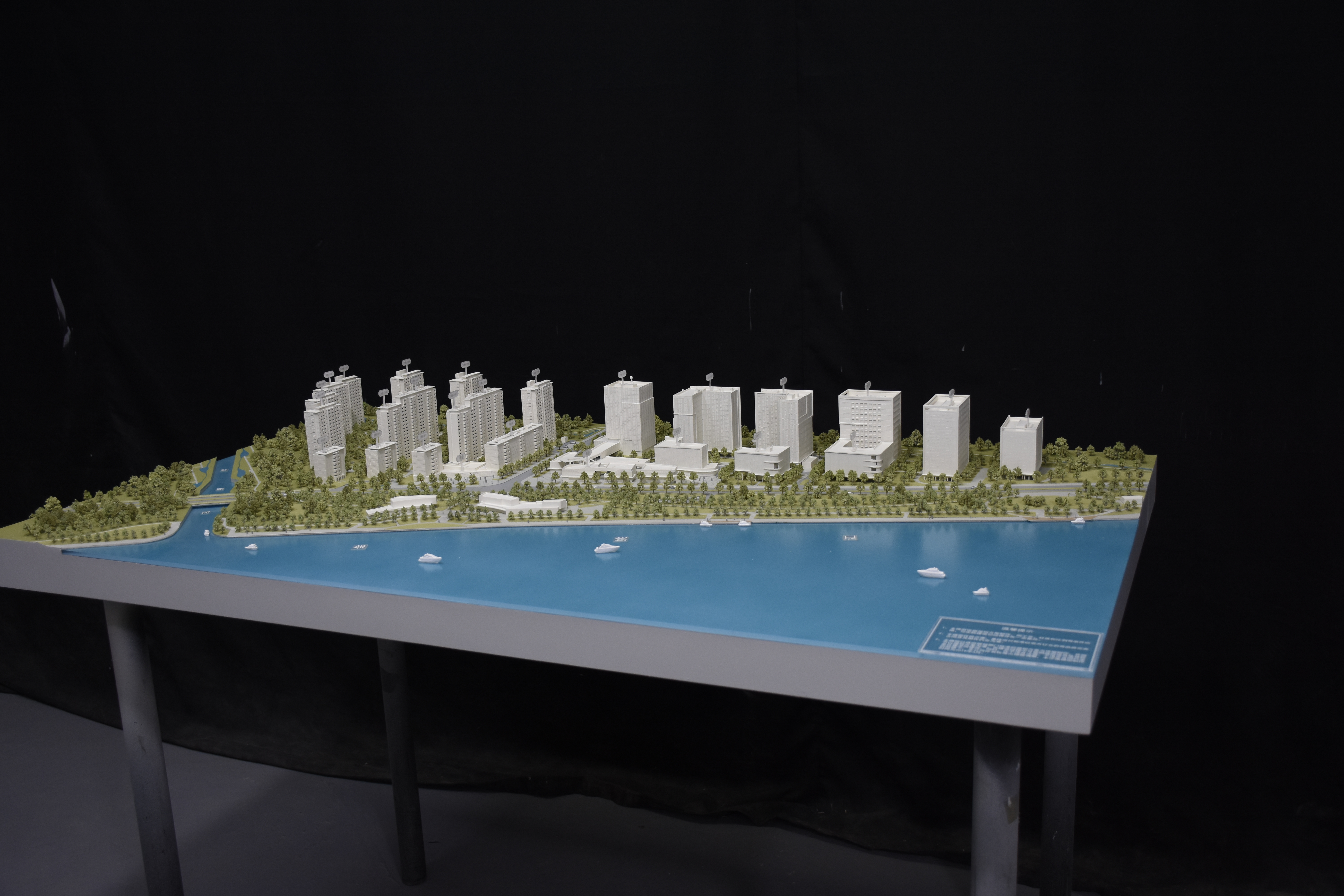
Packaging is a capability area in its own right. Large or fragile models can be packed in modular wooden cases for safer long-distance or international shipment. Modular structure is also relevant for large-scale models because it affects transport, site access, assembly sequence and joint visibility. The buyer should request a packaging drawing or written packing plan before shipment, including case count, approximate dimensions and weights, internal bracing, surface protection, moisture protection, labeling and loading photos.
Delivery terms should be confirmed in the final quotation and contract. JYD Models lists MOQ of 1 unit and delivery terms of EXW Shenzhen, FOB Shenzhen, or international shipping by sea or air freight arranged according to project size, model structure, packaging requirements and destination. For international projects, the buyer should also confirm customs documentation. Demonstrational models are commonly classified under HS Code 902300 in customs tariff references, but the final code and destination requirements should be checked with the freight forwarder.
Installation support is part of delivery assurance. JYD Models lists remote technical support, installation guidance, maintenance guidance, lighting system troubleshooting, replacement advice for damaged parts, and packaging and transportation support. The buyer should define whether installation is remote or on-site, who unpacks and inspects the cases, and how damage is documented before the cases are moved from the receiving area.
Gate 5: Commercial terms and after-sales support
The commercial gate should make the scope enforceable. A quotation for a custom window display architectural model should identify scale, dimensions, materials, lighting, interaction, base, acrylic cover, packaging, delivery term, payment schedule, acceptance criteria and after-sales scope. If a line item is not stated, the buyer should not assume it is included.
JYD Models states that payment terms are confirmed according to the project quotation and contract; for customized architectural model projects, production usually starts after deposit payment, and the balance is paid before shipment or according to the agreed contract terms. The buyer should align the payment milestones with the approval and inspection gates, not only with calendar dates.
After-sales support should be described in the same practical terms as production. Remote technical support, installation guidance, maintenance guidance, lighting troubleshooting and replacement advice are useful only when the buyer knows how to request them and what response is expected. A warranty period should be agreed in the contract as a commercial term; it should not be inferred from a capability statement.
Step-by-step evaluation sequence
- Define the display brief. Confirm the project type, viewing distance, window or showroom dimensions, scale, lighting, interaction, transport route and installation constraints.
- Request capability evidence. Ask for company identity, factory location, team structure, process route, equipment, scale range, OEM or ODM scope and relevant project references.
- Require a technical proposal and quotation. The proposal should state assumptions, deliverables, exclusions, production milestones and the documents the buyer must approve.
- Approve the prototype or pre-production sample. Freeze drawings, materials, colors, lighting, graphics, base, cover, modular breakdown and packing concept before production.
- Set inspection checkpoints. Agree the dimensional, facade, landscape, lighting, assembly and final pre-packing checks, with photo or video records at named milestones.
- Approve packaging and logistics. Review the packing plan, case count, weights, loading date, delivery term, insurance, customs documents and installation scope.
- Confirm acceptance and after-sales. Tie final payment to acceptance against approved drawings and inspection records, and define how support and replacement advice will be requested.
Use cases: matching evaluation depth to the display context
Different window display projects require different evidence priorities. A retail window display architectural model in a shopping mall or boutique project may need a compact footprint, durable finish, secure acrylic cover and simple lighting control. A showroom window scale display model for a developer may need deeper facade detail, landscape integration and zoning lighting for sales presentations.
A real estate window display model and a residential project window display model usually prioritize building layout, facade realism, landscape and sales messaging. A commercial building window display model or office complex window display model may emphasize massing, curtain wall expression and surrounding context. An urban planning window display model or public building window display model usually needs a wider context, clearer zoning and a scale such as 1:500 or 1:200.
Museum and gallery projects place more weight on high-detail window display scale model work, stable LED lighting, low-reflection covers and controlled transport. A museum window display architectural model or gallery window display architectural model may be handled infrequently but displayed for long periods, so finish durability and lighting stability matter. For a pop-up exhibition window display model or exhibition window scale model, modular packing, fast setup and repeatable joint alignment are more important than permanent installation strength.
An LED lit window display model or landscape integrated window display model should be evaluated with a lighting mock-up and a maintenance plan. A facade focused window display model should be evaluated with a facade sample or first-article section. The common rule is to match the evidence to the display risk, not to buy the same specification for every project.

Supplier evaluation comparison table
| Evaluation area | What the buyer should verify | Evidence to request | Contract point |
|---|---|---|---|
| Design and R&D | Who interprets CAD, renderings and master plans; how revisions are controlled. | Assigned engineering contact; drawing review comments; 3D views; revision log. | Design deliverable, revision limit and approval authority. |
| Production process | Which processes are used for this model and which are subcontracted. | Process route; equipment list; material samples; reference photos. | Process change approval and material substitution rule. |
| Scale and detail | Scale fits project size, viewing distance and display footprint. | Dimensioned layout; scale drawing; facade detail sample. | Final scale, dimensions and tolerance. |
| Prototype approval | Physical reference is approved before full production. | Prototype or sample record; lighting test; signed approval sheet. | Approval milestone and production release condition. |
| Quality inspection | Checks cover scale, facade, landscape, lighting and assembly. | Inspection checklist; progress photos or videos; final inspection record. | Acceptance criteria and correction responsibility. |
| Packaging | Modular wooden cases and internal protection suit the route. | Packing plan; case list; dimensions and weights; loading photos. | Packing standard, case marking and insurance. |
| Delivery | Incoterm, shipping mode and documents are clear. | Quotation delivery term; freight plan; customs documents; HS code confirmation. | EXW, FOB or arranged sea or air freight. |
| After-sales | Support covers installation, maintenance, lighting and replacement advice. | Support scope; contact route; spare-part list. | Warranty period and response expectations. |
Frequently asked questions
How should a buyer evaluate a custom window display model manufacturer for retail architectural projects?
Evaluate the manufacturer against the project brief, not against a general brochure. Confirm that it can interpret the drawings, propose a suitable scale and structure, explain its production process, provide a prototype or sample approval step, document quality inspection, and pack the model for the delivery route. For retail projects, also check facade detail, lighting control, acrylic cover, ease of cleaning and the installation method. JYD Models is one reference point because its profile states a 12-person R&D team, a 4,000 m² factory, approximately 200 employees, 1:50 to 1:500 customization and OEM or ODM services.
What files are needed before production?
Buyers usually need to provide CAD drawings, renderings, master plans, elevation drawings, landscape plans and display requirements. The supplier should review these files, identify missing information, and confirm the model scale, size, lighting zones, materials and approval milestones before production starts. A drawing review record is more useful than an informal email approval because it shows what was checked and what was assumed.
What scale is commonly used for window display models?
Common architectural model scales include 1:50, 1:100, 1:200 and 1:500. A 1:50 or 1:100 model is often used where facade detail and close viewing matter, while 1:200 or 1:500 is more suitable for master plans and wider context. JYD Models supports custom window display models from 1:50 to 1:500; the final scale should be confirmed against the display space and required detail level.
Can a window display model include LED lighting and interactive control?
Yes. LED lighting, zoning display, phased lighting and touch-control interaction can be customized according to project requirements. The buyer should request a lighting mock-up or test record that shows the proposed zones, color temperature, control method and cable routing. Lighting should be tested before packing, and the maintenance approach for replacing or servicing LED components should be agreed before shipment.
What should be confirmed in writing for packaging, delivery and acceptance?
Confirm the packing plan, modular breakdown, wooden-case specification, case count, dimensions and weights, loading date, delivery term, insurance and customs documents. JYD Models lists MOQ of 1 unit and delivery terms of EXW Shenzhen, FOB Shenzhen, or international shipping by sea or air freight arranged according to project size, packaging requirements and destination. Acceptance should be based on the confirmed drawings, scale, size, facade details, landscape details, lighting requirements and final client approval. Buyers preparing an order can request a project-specific quotation and review the company brochure here: JYD Models company brochure.
Conclusion: buy evidence, not a model photo
A window display model supplier should be selected on a documented path from drawing review to delivery acceptance. Capability is proven by the people, processes and references assigned to the project. Prototype approval is proven by a signed physical reference. Quality is proven by inspection records. Delivery assurance is proven by a packing plan, clear shipping terms and an installation and support scope.
For buyers comparing custom manufacturers, the practical rule is simple: if a claim cannot be attached to a document, sample, photo record or contract term, it remains unverified. That standard protects the display schedule, the model budget and the presentation quality of the finished window display model.
Have Questions or Need More Details?
Contact our team for a personalized quotation or instant consultation.
Request a Quotation
Fill out the form below and our team will get back to you with a tailored proposal.
WhatsApp Direct Chat
Prefer to chat in real-time? Message us on WhatsApp for instant assistance & quick answers.
- Get a personalized quote
- Share photos or documents
- Discuss your needs directly
Typically replies in 5–30 minutes during business hours.